
Tea Bag Tags
Table of Contents
Tea Bag Tags, Sized For Your Actual Machine
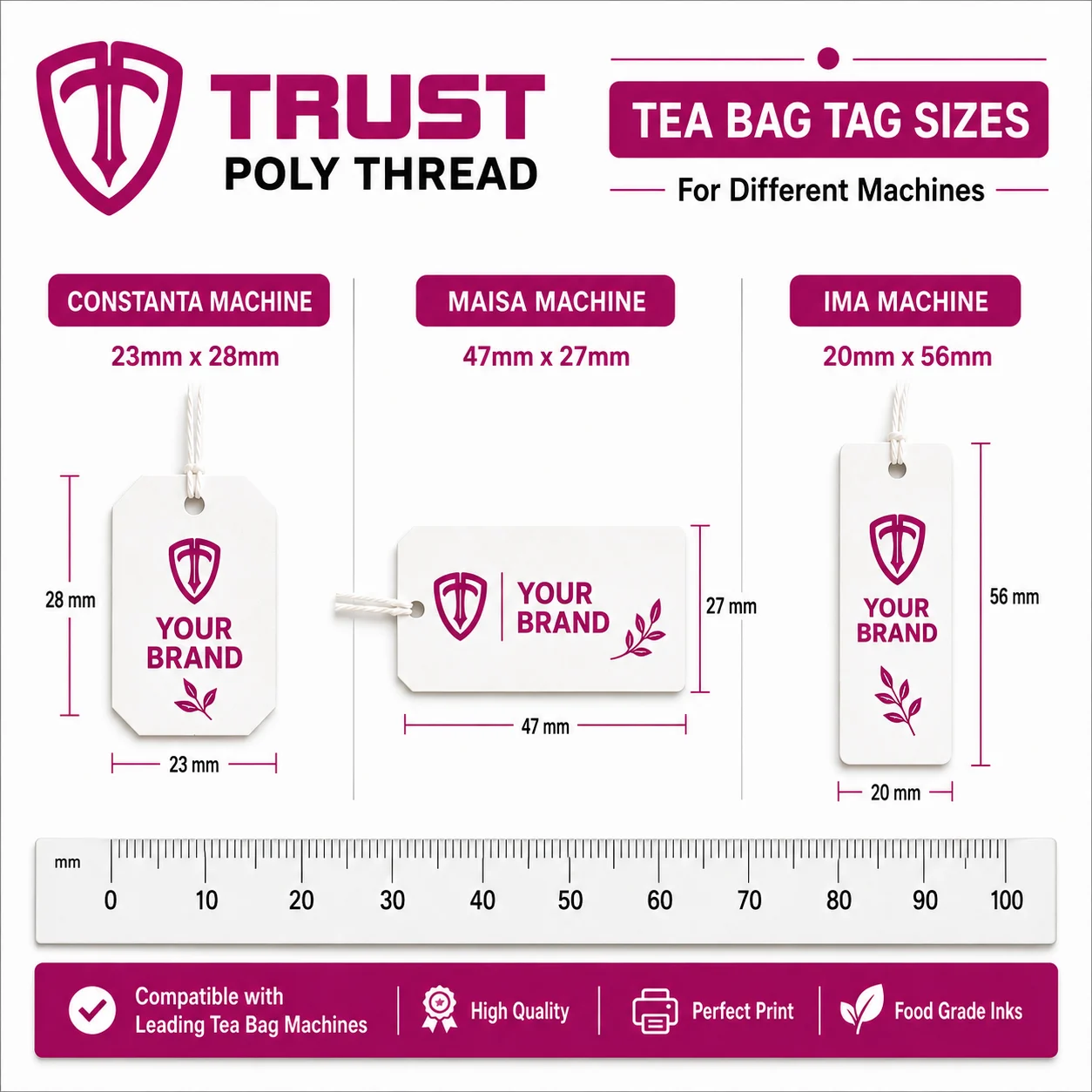
We supply tea bag tags for Constanta, Maisa and IMA lines, from Kolkata. If you also need envelopes for the same product, we supply those too, but as a separate line with its own specification, so we've given envelopes their own page rather than folding everything into one.
Constanta, Maisa Or IMA, And Why The Model Actually Matters
These three names cover most of the tagging machines running in Indian tea packing right now, but here's the part that trips buyers up. Tag sizing isn't one fixed number per brand. We checked this against several independent sources rather than trust a single one, and the numbers genuinely don't agree. One listing gives a Constanta tag as 28mm by 32mm. Another gives the same brand's standard tag as 28mm by 24mm. A third source pairs Maisa with that same 28 by 32 figure, while other listings put Maisa tags at a completely different size entirely. None of these sources are wrong exactly. They're describing different machine generations, different regional variants, or different tag styles under the same brand name.
So rather than hand you a size chart that might not match your line, we'd rather ask what machine you're running, model included if you know it, and confirm the tag size against that. It takes one extra question upfront and saves a wasted print run later.
Beyond those three, there's a wider family of tagging machines running across the industry: Compacta, Perfecta, IWKA, mai s.a., PT133, and a handful of others, each with their own sizing quirks. We stay focused on Constanta, Maisa and IMA because that's genuinely what most of our buyers run, rather than claiming to cover every machine on the market and falling short on the ones we don't actually know well.
What A Tea Tag Actually Needs To Get Right
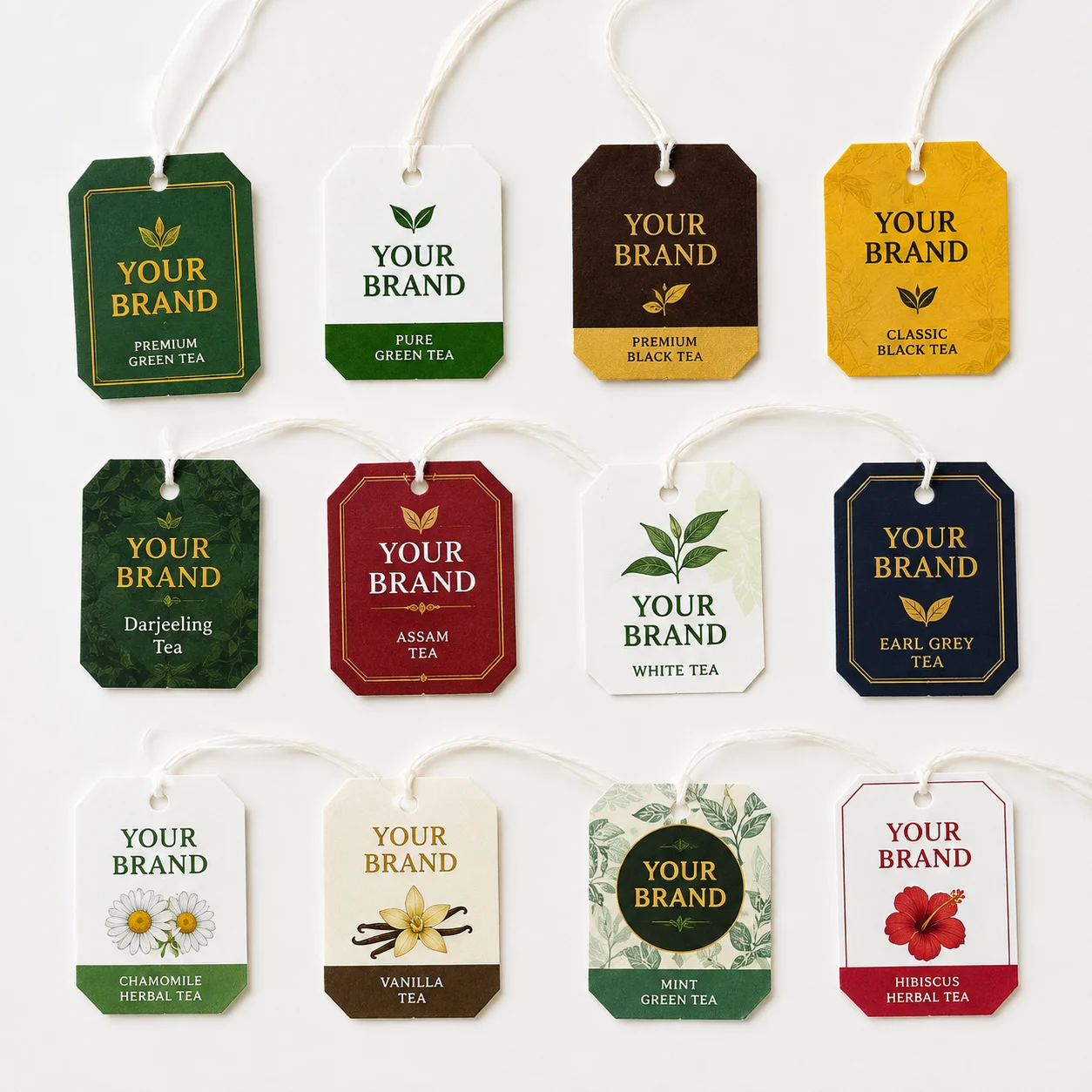
A tag isn't just a printed rectangle. It needs a reinforced hole where the string attaches, since that's the single most common failure point on a high-speed line — a tag that tears loose costs more downtime than almost anything else on the machine. It needs a printing surface that resists bleed, since a smudged logo undoes whatever premium impression the tag was meant to create. And it needs to hold its shape and colour consistently across a full print run, not just on the first hundred pieces a buyer inspects before signing off.
Paper stock matters here too. Tags typically run in two general constructions: a straightforward paper-based board, or a laminated version combining paper with a thin plastic layer for extra stiffness and moisture resistance. Which one you need depends on how your tea is handled between packing and the cup, not just on cost.
Plain Or Holographic, Depending On What You're Protecting Against
Plain printed tags cover most standing orders just fine. That's especially true for tea moving through a controlled supply chain, garden to known buyer. Holographic and security-printed tags exist for the same reason holographic sealing tape does. They're harder to counterfeit. That matters more once your tea reaches open retail shelves, under a brand name people actually recognise.
If counterfeiting or grey-market repackaging is a genuine concern for your brand, a security tag is worth the extra cost. If you're moving tea within a closed relationship you already trust, plain print does the job without the added expense.
Supplied, Not Manufactured In House
Same as our film and tape range, we don't run our own hologram or die-cutting line for tea tags. We supply tags sourced against your machine specification from established producers, checking the print quality and cut accuracy before it goes out rather than just relaying whatever arrives. If your requirement needs a specific security feature or an unusual die-cut shape, ask us directly and we'll tell you plainly whether it's something we can source reliably, rather than promise and then scramble.

On Minimum Order Quantities, Honestly
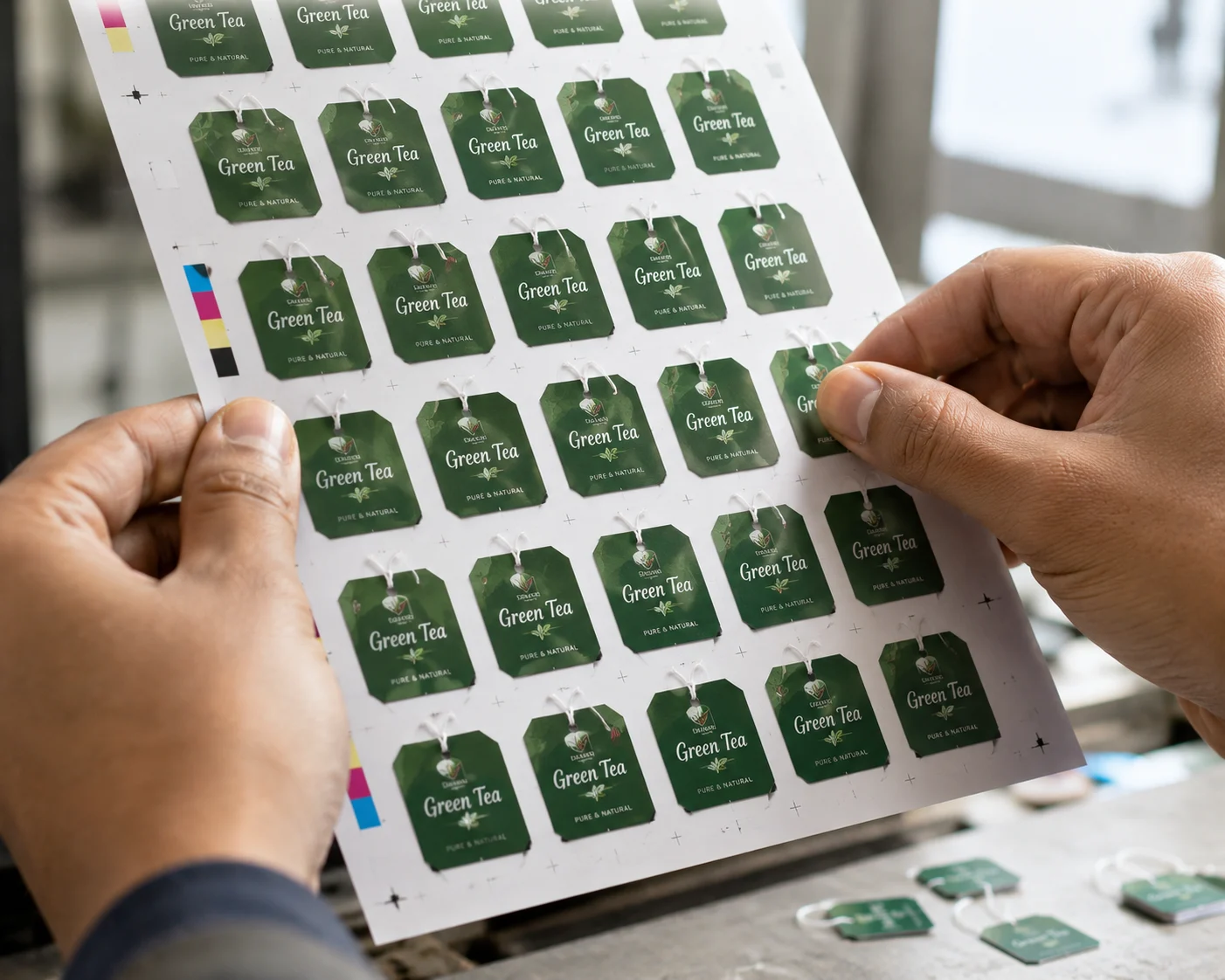
Custom printed tags are not like thread. A cone is wound to order in almost any quantity. A printed tag needs a print run, and print runs have real economics behind them. Some producers in this category quote minimums in the tens of thousands. Others, running larger dedicated presses, quote minimums in the lakhs for a fully custom design. We've seen both in the market, and we're not going to pretend one number applies everywhere.
What we'd rather do is ask what you actually need, match you against a source whose minimum genuinely fits your order, and tell you plainly if your quantity is below what any of our sources can do economically. That's more useful than a number on a page that turns out to be wrong for your specific case.
Who Actually Orders This From Us
Tea gardens and packers across North Bengal make up most of our buyers here. Most of these buyers are already taking shrink film from us for the same product line, and quite a few order thread too if they're closing outer cartons or larger sacks. One garden, one purchase order, one dispatch, instead of chasing three different suppliers during a season that doesn't wait for anyone.
Being based in Kolkata puts us within reasonable reach of Darjeeling, the Dooars and Terai belt. Together, that covers a large share of West Bengal's tea production. That's less about a dramatic transport advantage and more about being close enough to sort a problem quickly rather than waiting days for a supplier states away to even respond.
We're not chasing the same customers as the big hospitality-and-retail-focused packaging houses in this category, the ones supplying five-star hotels and boutique tea brands with premium gift packaging. Our buyers are mostly gardens and packers running production volume, not a handful of luxury retail SKUs. If that's genuinely your situation instead, we'll say so honestly rather than pretend we're the right fit for a market we don't actually serve.
Timing Your Order Around The Season
Spring is when things get tight, both for us and for every other supplier in this category, since every garden needs tags at roughly the same time. If you know your first flush timeline, ordering a few weeks before picking starts is worth doing. A rushed order placed the week picking begins ends badly. A garden settles for whatever's available. Not what actually fits their machine.
How Ordering Actually Works
Tell us your machine brand and model if you know it, whether you need plain or security tags, and roughly how many you're running through per season. We'll confirm the right size, paper stock and a realistic minimum rather than take an order for a generic spec that might not fit your line or your volume. Once confirmed, we dispatch from Kolkata, alongside shrink film or thread if you're ordering those too. Need envelopes as well? They're a separate specification with their own page, but the same conversation covers both if you need them together.
Questions We Get Asked About Tea Bag Tags
Do all Constanta machines use the same tag size?
No, and this is the single most common mix-up we see, backed by real disagreement across the market's own listings. Tag dimensions vary by the exact machine model and generation, not just the brand name. Tell us your specific model if you know it, and we'll confirm the size against that rather than assume one standard fits every Constanta line.
What paper or material should my tea tag be made from?
Most tags run on either a plain paper board or a laminated paper construction with a thin plastic layer for extra stiffness and moisture resistance. Plain board suits most standard applications. Laminated stock is worth the extra cost if your tags face humid storage or heavy handling before use.
Do I need holographic or security tags, or is plain print enough?
Plain print covers most tea moving through a trusted, closed supply chain. Holographic or security tags earn their extra cost once your tea reaches open retail under a recognisable brand, where counterfeiting or repackaging is a genuine risk.
What machines do you supply tags for?
Constanta, Maisa and IMA cover most of what we work with. If your line runs a different machine, tell us the brand and we'll confirm honestly whether we can source a matching tag rather than assume it'll fit.
Can you match an existing tag we already use, even if we don't know the exact machine model?
Yes, generally. Send us a sample of your current tag, or at minimum accurate measurements, and we can usually match the size and paper weight from that without needing the exact model number.
What's the HSN code and GST rate for printed tea tags?
Printed paper tags generally fall under HSN 4821, commonly cited at 18 percent GST. Some paper packaging sub-categories did see rate reductions under the September 2025 reform, so the exact classification and rate can vary depending on the specific product form. Confirm the precise code with your accountant for your invoice.
What's a realistic minimum order quantity for custom tags?
It genuinely varies by producer and design complexity, anywhere from a modest few thousand pieces to well into six figures for a fully custom print run on certain presses. Tell us your requirement and we'll match you against a source whose minimum actually fits, rather than quote a single number that may not apply to your case.
When should I place my order ahead of the tea season?
A few weeks before your first flush picking starts is the safe window. Spring is when every tea garden in the region needs tags at once, and a last-minute order during picking week often means settling for whatever's available rather than what actually fits your machine.
Can tags be printed on both sides?
Generally yes, front and back printing is a standard option rather than a special request, since tag-printing machines commonly run separate reels for each side. Tell us your design requirement and we'll confirm it against your specific machine and paper weight.
Can I get a sample before a full season's order?
Yes, and we'd suggest it, especially if you're switching from a previous supplier or trying a new machine model for the first time. Testing a small batch before the season's real volume order saves a bigger problem later.
Do you dispatch outside West Bengal for tea packers elsewhere in India?
Yes, though a large share of our buyers are naturally based in North Bengal given our own location. We dispatch nationally regardless, and being Kolkata based mostly just shortens transit for the Eastern region specifically.
Do you supply tags for export or only for the Indian market?
We currently supply within India. If you're asking on behalf of a buyer exporting finished tea, tell us directly and we'll be upfront about what we can and can't support, rather than say yes and sort it out later.
How far in advance should a new buyer start the conversation with you?
Earlier than feels necessary, honestly. If you're a new buyer setting up tags for the first time, or switching machines, starting the conversation a couple of months before your season gives us room to confirm sizing properly rather than rush a first order under pressure.
Can I put a QR code or batch number on the tag?
Yes, this is a common request, particularly for brands wanting traceability or a link to more product information. Tell us what you need encoded and we'll confirm it against your print and paper specification.
We're switching from a previous tag supplier mid-season. How disruptive is that?
Less than you'd expect, provided you can share a sample of your current tag or accurate measurements. The main risk is timing, so the earlier you start that conversation before you actually run out, the smoother the switch goes.
Do you also supply tea bag envelopes?
Yes, as a separate product with its own specification and its own page on this site. Tags and envelopes come from different considerations, paper board versus barrier film, reinforced hole versus seal type, so we've kept the two apart rather than blur them into one generic listing.
Talk to us before you order
A two-minute call usually settles it faster than an email back-and-forth.