
Let's Discuss Your Requirements, Get a Free Quote

    Tea Bag Envelopes

    Tea Bag Envelopes, Matched To What's Actually Inside

    We supply tea bag envelopes for Constanta, Maisa and IMA lines, from Kolkata. This is a separate specification from tea tags, even though the two often ship on the same order, so we've given it its own page rather than folding it into the tag listing.
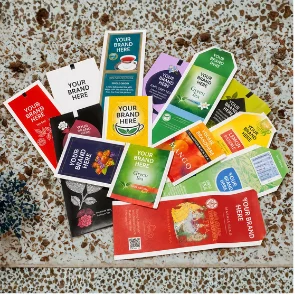
    Tea bag envelopes supplied by Trust Poly Thread, Kolkata
    Table of Contents

    Paper, MBOPP Or PE-Lined, And What Each One Actually Protects Against

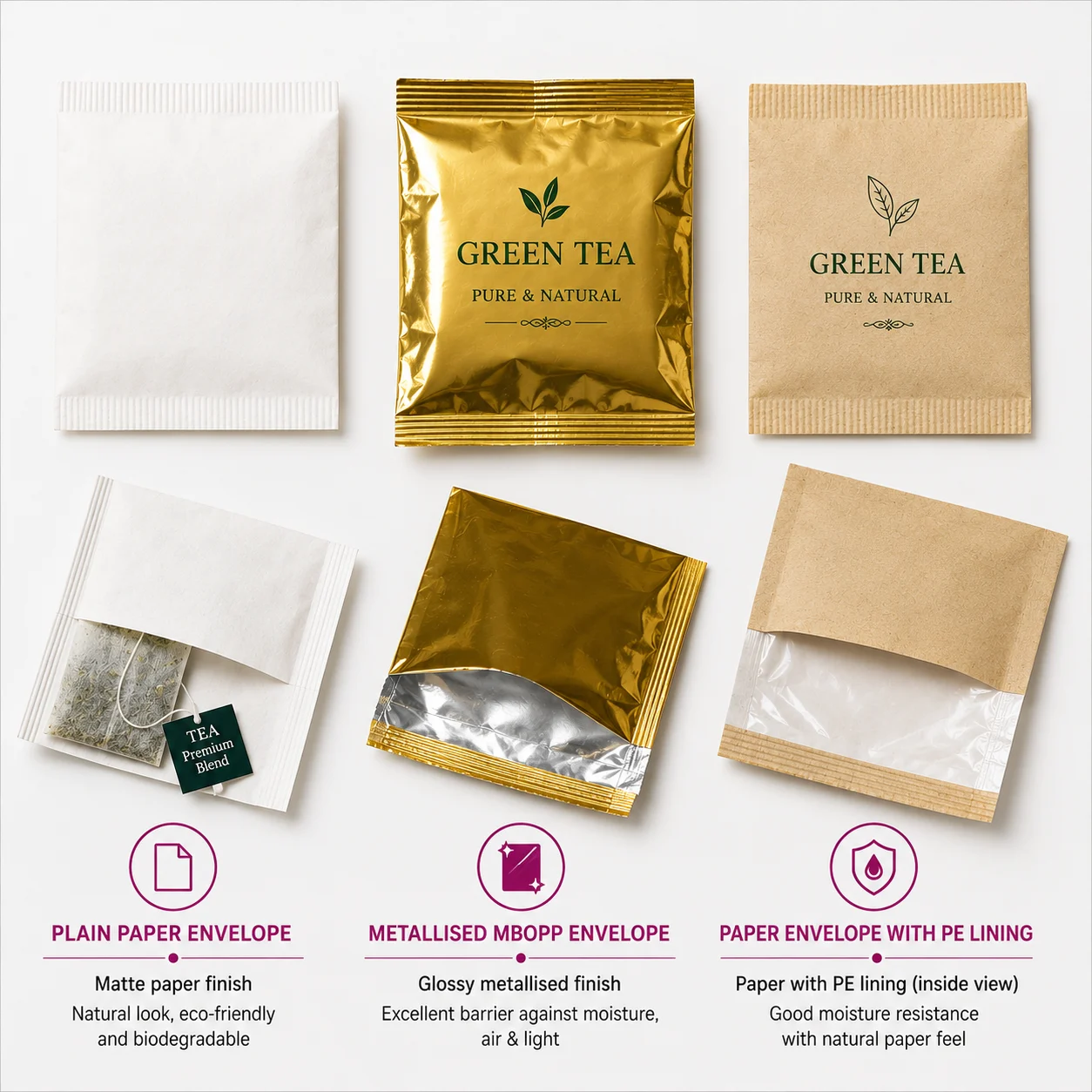
    Plain paper envelopes are the straightforward option, usually a chromo or food-grade paper stock. They're economical and they work fine for tea that's consumed reasonably soon after packing, but they offer limited protection against moisture and aroma loss over a long shelf life.

    MBOPP envelopes add a genuine barrier layer. That's short for metallised biaxially oriented polypropylene. The metallised film blocks moisture and helps hold aroma in far better than plain paper does, which is why it shows up on tea meant to sit on a shelf for months rather than weeks. It also gives a glossier, more premium look, which is a secondary benefit but not the main reason to choose it.

    Some producers also offer a PE-lined paper option. That's a paper outer layer with a thin polyethylene lining underneath. This sits between the two, better moisture resistance than plain paper, without the full cost of a metallised film.

    None of these is universally correct. The right choice depends on how long your tea sits in the envelope before it's used, and how much of a premium shelf presence you actually need.
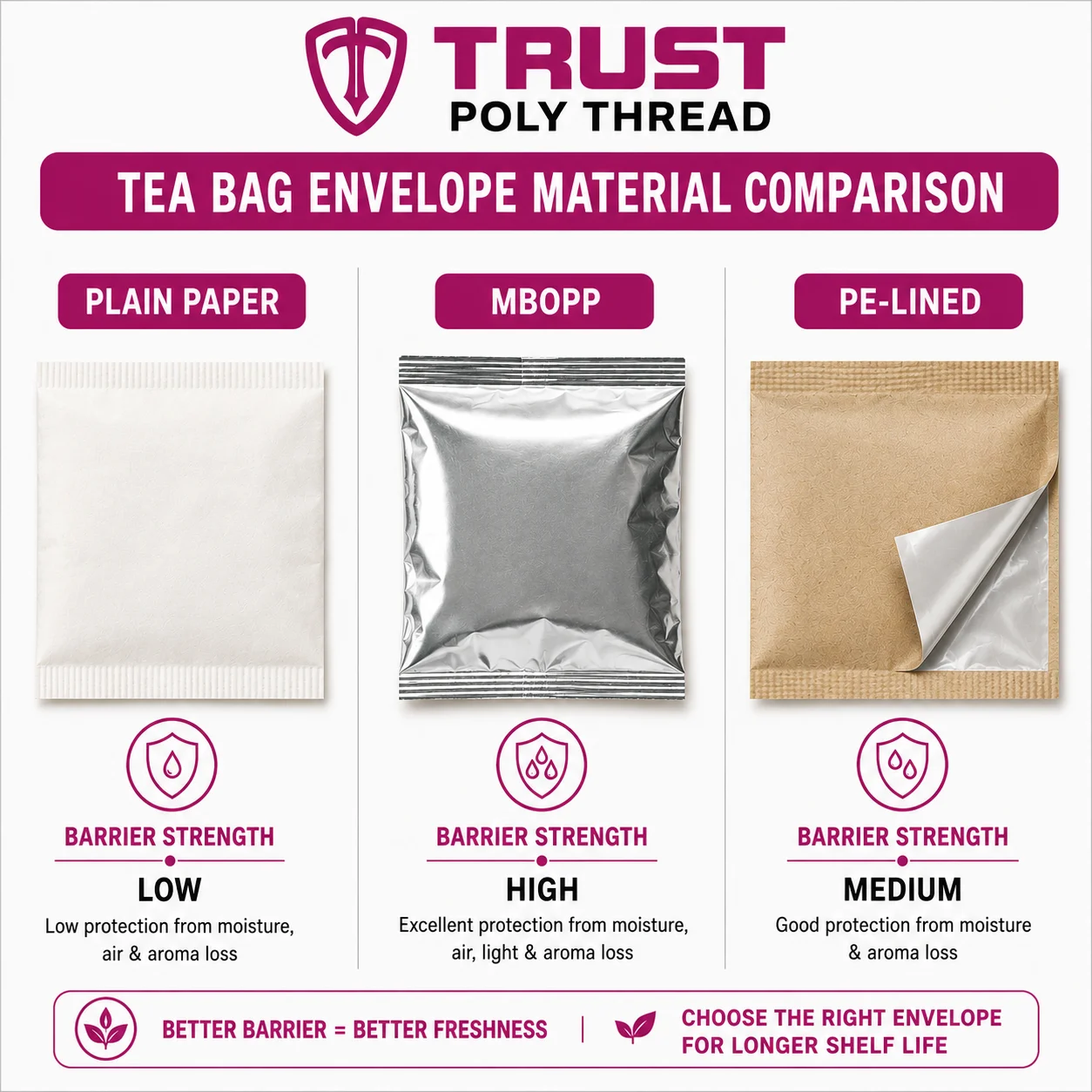
    Paper, MBOPP and PE-lined tea bag envelope materials compared

    Heat-Seal Or Glue-Seal, And Why That Choice Matters On Your Line

    Envelopes close one of two ways. Heat-sealable stock seals under heat and pressure on your machine, similar logic to heat-sealable film elsewhere in packaging. Glue-sealable stock uses an adhesive closure instead. Which one you need depends entirely on your machine, not on preference, since a heat-seal envelope run through a machine built for glue seals, or the reverse, simply won't close properly.

    Confirm this before you order, not after. Tell us your machine's sealing method along with the brand and model. We'll match the envelope stock to it, rather than send whichever's easiest for us to source.

    Sizing, And The Same Honest Caveat As Our Tags

    One real example worth knowing: a commonly cited envelope size in the market is around 58mm by 152mm for a paper envelope, though that's one data point among several, not a universal standard. Envelope dimensions follow the same pattern as tag dimensions do. They vary by machine brand and model, sometimes meaningfully, and a size that fits one Constanta or Maisa setup won't automatically fit another.

    So the same rule applies here as with tags. Tell us your machine, model included if you know it, and we'll confirm the size against that rather than hand you a number that might be wrong for your specific line.

    Constanta, Maisa Or IMA, Same Machines As Our Tags

    These three cover most of what we work with, alongside the broader family of machines running across the industry, Compacta, Perfecta, IWKA, mai s.a., PT133 among others. If your line runs a different machine entirely, tell us the brand and we'll be honest about whether we can source a matching envelope, rather than assume it'll work.
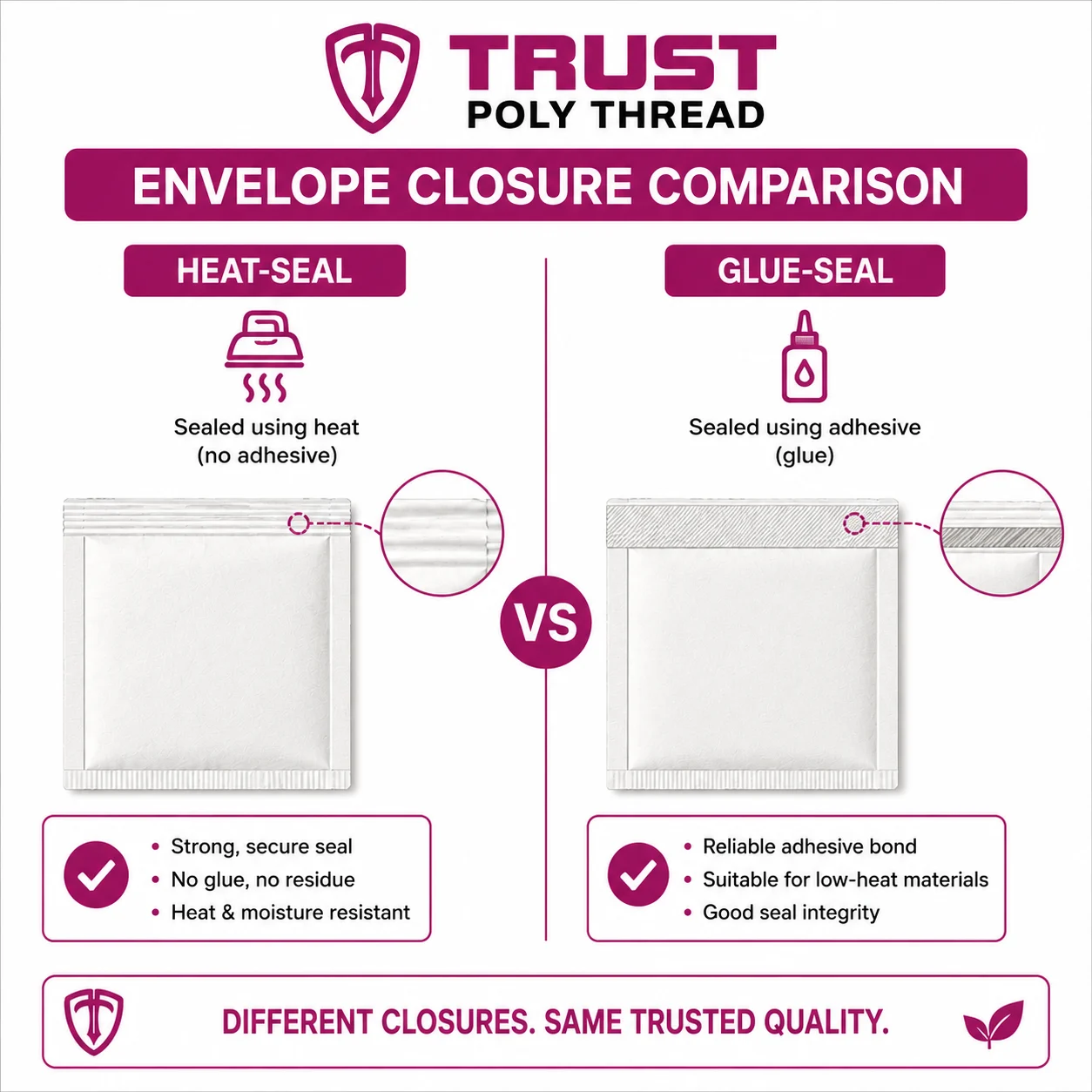
    Heat-seal and glue-seal tea bag envelope types

    Barrier Properties, Explained Without The Sales Pitch

    Barrier protection means how well the envelope keeps moisture and aroma in, and outside contamination out. For tea consumed within a few weeks of packing, this genuinely doesn't matter much, plain paper does the job. For tea sitting in distribution or on a shelf for months, a weak barrier changes the outcome. The product tastes noticeably different by the time someone actually brews it. If you've had complaints about tea tasting stale despite fresh stock, the envelope material is worth checking before you look anywhere else.

    A Few Things That Go Wrong, And Why

    Envelopes that seal poorly are almost always a mismatch between stock and machine. Heat-seal material run through a glue-seal line, or the reverse. Rarely is it a fault in the material itself. Envelopes that tear on the packing line are usually a paper weight too light for the handling speed. Not a defect in that particular batch. And envelopes that let tea go stale early? More often than buyers expect, it's simply the wrong barrier choice for how long the product actually sits before use. None of these are exotic problems. They're the three things worth checking first before assuming a batch is faulty.

    Supplied, Not Manufactured In House

    Same as our tag range and our film range generally, we don't run our own lamination or metallising line for envelopes. We source envelope stock against your machine specification and sealing method from established producers, checking construction and seal integrity before it goes out rather than just relaying whatever arrives. If your requirement needs an unusual barrier specification or a die-cut shape outside the standard range, ask us directly and we'll tell you plainly whether it's something we can source reliably.
    On Minimum Order Quantities, The Same Honest Answer

    Envelope production runs on the same print-run economics as tags do, and minimums vary by producer and by how customised your design is. We've seen minimums as low as a few thousand pieces, for a simple single-colour design. We've also seen minimums running into six figures, for a fully custom, multi-colour, barrier-film envelope on a larger press. Tell us what you actually need and we'll match you against a source whose minimum genuinely fits, rather than quote a number that might not apply to your order.

    Who Actually Orders This From Us

    Tea gardens and packers across North Bengal make up most of our buyers here, and it's rarely envelopes alone. Most of these buyers are already taking tags and shrink film from us for the same product line, and quite a few order thread too if they're closing outer cartons. Being based in Kolkata puts us within reasonable reach of Darjeeling, the Dooars and Terai belt, close enough to sort a problem quickly rather than wait days for a response from a supplier states away.

    Demand follows the tea calendar closely, picking up fast once first flush starts in spring, with a smaller second push around the summer flush. It doesn't slow down through the rest of the year the way our rice-linked business does, since blended and packaged tea keeps moving to market steadily.

    How Ordering Actually Works

    Tell us your machine brand and model, whether your line seals by heat or glue, and whether shelf life is a real consideration for your product. We'll recommend the right stock and a realistic minimum rather than take an order for a generic spec that might not fit. Once confirmed, we dispatch from Kolkata, alongside tags, shrink film or thread if you're ordering those too.

    Questions We Get Asked About Tea Bag Envelopes

    What's the difference between plain paper, MBOPP and PE-lined envelopes?

    Plain paper is economical but offers limited moisture and aroma protection. MBOPP, a metallised film, gives a genuine barrier for longer shelf life and a glossier look. PE-lined paper sits in between, better protection than plain paper without the full cost of a metallised film. The right one depends on how long your tea sits before use.

    How do I know if I need heat-seal or glue-seal envelope stock?

    It depends entirely on your machine, not on preference. Tell us your machine's sealing method along with the brand and model, and we'll match the envelope stock to it. Running the wrong seal type through your machine means it simply won't close properly.

    What size are tea bag envelopes?

    It varies by machine brand and model rather than following one fixed standard, the same way tag sizes do. A commonly cited example is around 58mm by 152mm for a paper envelope, but treat that as one reference point, not a universal number. Tell us your machine and we'll confirm the actual size against it.

    Do all Constanta or Maisa machines use the same envelope size?

    No. Envelope dimensions follow the same pattern as tag dimensions, varying by exact model and generation rather than by brand name alone. Tell us your specific model if you know it, and we'll confirm the size against that.

    Which envelope material should I choose for long shelf life?

    MBOPP, the metallised barrier film option, generally holds up best for tea that sits in distribution or on a shelf for months rather than weeks. Plain paper is fine for shorter turnaround.

    What machines do you supply envelopes for?

    Constanta, Maisa and IMA cover most of what we work with. If your line runs a different machine, tell us the brand and we'll confirm honestly whether we can source a matching envelope.

    What's a realistic minimum order quantity for custom envelopes?

    It varies by producer and design complexity, from a few thousand pieces for a simple design up to six figures for a fully custom barrier-film envelope on a larger press. Tell us your requirement and we'll match you against a source whose minimum actually fits.

    What's the HSN code and GST rate for tea bag envelopes?

    Classification depends on the material. Paper-based envelopes generally sit under the same paper products classification as tags, commonly cited at 18 percent GST. MBOPP or film-laminated envelopes may fall under a plastics classification instead, which also generally sits at 18 percent. Confirm the exact code with your accountant, since the specific construction affects classification.

    Can I get envelopes printed to match tags I'm already ordering?

    Yes, and telling us both requirements together usually means a more consistent result than ordering them separately from different places. Share your branding and machine details once and we'll coordinate both specifications.

    My tea has been tasting stale despite being fresh stock. Could the envelope be the problem?

    It's worth checking before you look elsewhere. A weak barrier material lets moisture and aroma escape faster than buyers expect, especially over a few months of storage or distribution. Tell us your current envelope material and how long your tea typically sits before use, and we can say honestly whether that's a likely cause.

    Can I get a sample before a full season's order?

    Yes, and we'd suggest it, particularly if you're switching materials or trying a new machine model for the first time. Testing a small batch before the season's real order saves a bigger problem later.

    Do you dispatch envelopes outside West Bengal?

    Yes, nationally. Being Kolkata based mainly shortens transit for buyers in the East and North East, but supply isn't restricted to any one region.

    Is a metallised envelope always better than plain paper?

    Not always. It's better for barrier protection and shelf life, but it costs more and isn't necessary if your tea moves quickly from packing to use. Paying for barrier protection you don't need is as much a mistake as skipping it when you do.

    Can I switch envelope material partway through a season if my requirement changes?

    Generally yes, provided we haven't already run the specific batch. Tell us as early as possible if your requirement shifts, since catching it before production starts is far easier than after.

    Do you also supply tea bag tags?

    Yes, as a separate product with its own specification and its own page on this site. If you need both, one conversation with us covers it, but we've kept the two pages apart since paper board and barrier film are genuinely different decisions.

    Can envelopes be made from recycled or eco-friendly paper?

    Some producers offer recycled or FSC-certified paper stock for buyers with a sustainability requirement, though it's not universal across every source. Tell us if this matters for your brand and we'll confirm which of our sources can genuinely meet it, rather than assume every paper option qualifies.

    What causes an envelope to jam or misfeed on the packing line?

    This is usually a paper weight or stiffness mismatch for your specific machine's feed mechanism, rather than a random defect. If you're seeing regular jams, tell us your machine model and current envelope specification and we'll help figure out whether the stock needs adjusting.

    Do envelopes need to match the tag design exactly, or can they differ?

    They can differ, though most brands prefer visual consistency between the two. Tell us your tag design if you have one already, and we'll advise on matching the envelope for a coherent look, or confirm that a deliberately different design works fine if that's what you're after.

    Talk to us before you order

    A two-minute call usually settles it faster than an email back-and-forth.