
Let's Discuss Your Requirements, Get a Free Quote

    Shrink & Stretch Film

    Table of Contents

    Shrink And Stretch Film, Chosen For What They Actually Do

    We supply shrink film in POF and PVC, and stretch film in LLDPE, cut according to your width and micron requirement, from Kolkata. Buyers confuse these two constantly, and understandably so, since both show up in packaging conversations in the same breath. They do different jobs. If you tell us which one your product actually needs, we'll say so plainly rather than sell you whichever's easier to quote.
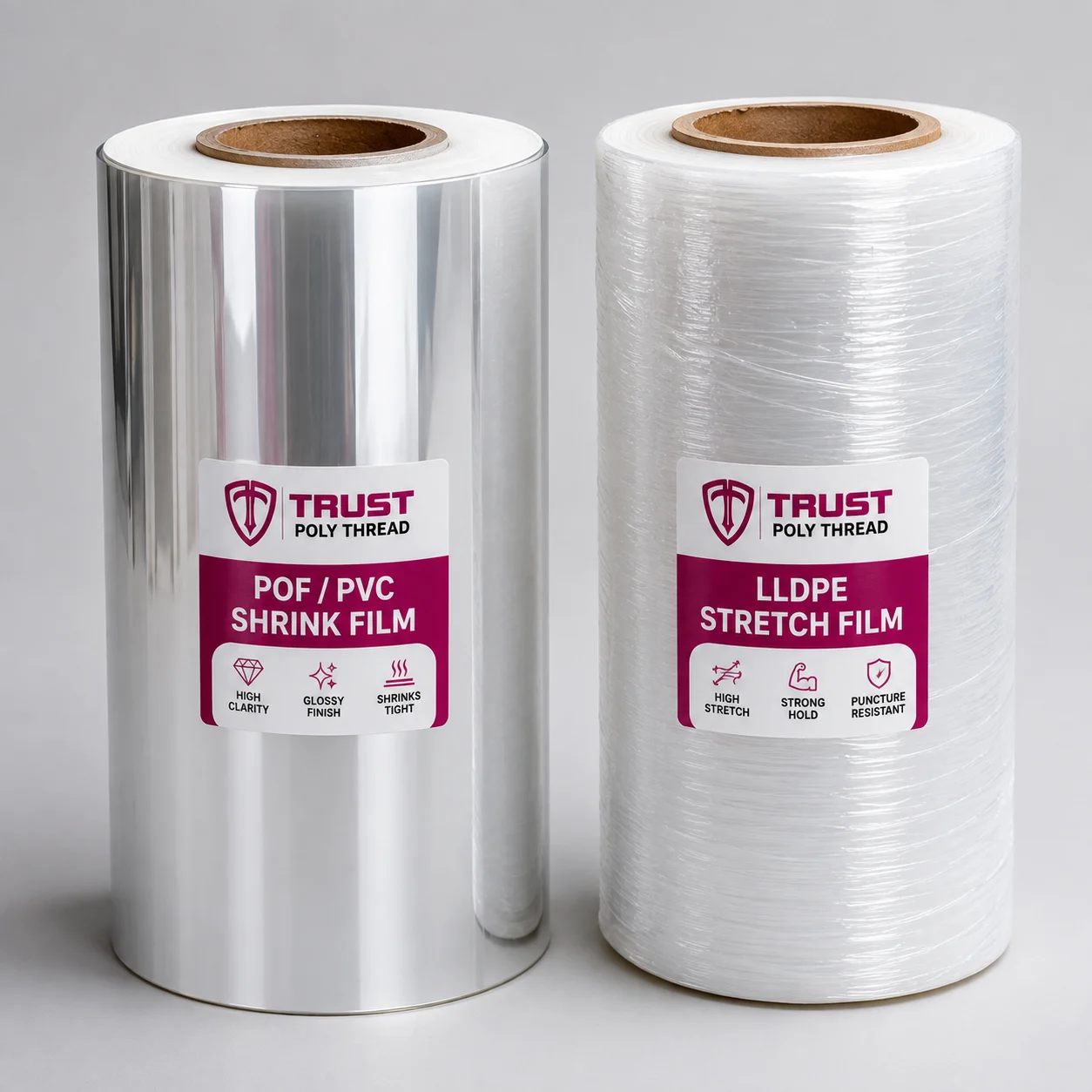
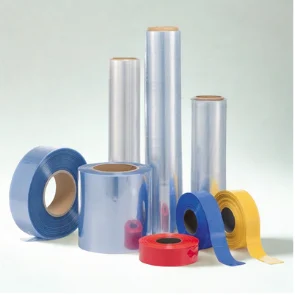
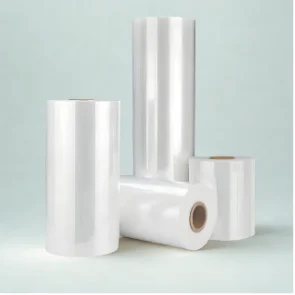
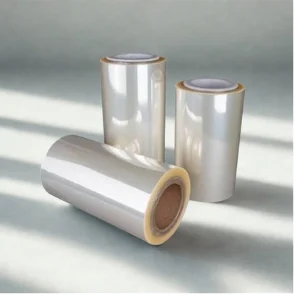
    Shrink film and stretch film rolls supplied by Trust Poly Thread, Kolkata

    Shrink Or Stretch, Not The Same Thing

    Shrink film needs heat. Once heated, it tightens and hugs the exact shape of whatever its wrapped around, which is why it works so well for bundling individual bottles, boxes or multi-packs into a tight, shelf-ready unit. Stretch film needs no heat at all. It wraps under mechanical tension instead, clinging to itself layer over layer, which is what makes it the standard choice for securing a loaded pallet before it goes on a truck.

    Ask yourself one question and the choice usually sorts itself out. Are you presenting a product, something that needs to look tight and finished on a shelf or in transit as a small unit? That's shrink film. Are you securing a stacked load so it survives a truck journey without shifting? That's stretch film. Using one where you need the other doesn't just look wrong, it actually fails at the job — a stretched pallet wrap won't shrink-bundle a multipack, and shrink film wrapped around a pallet load won't hold under transport stress the way a proper stretch wrap does.
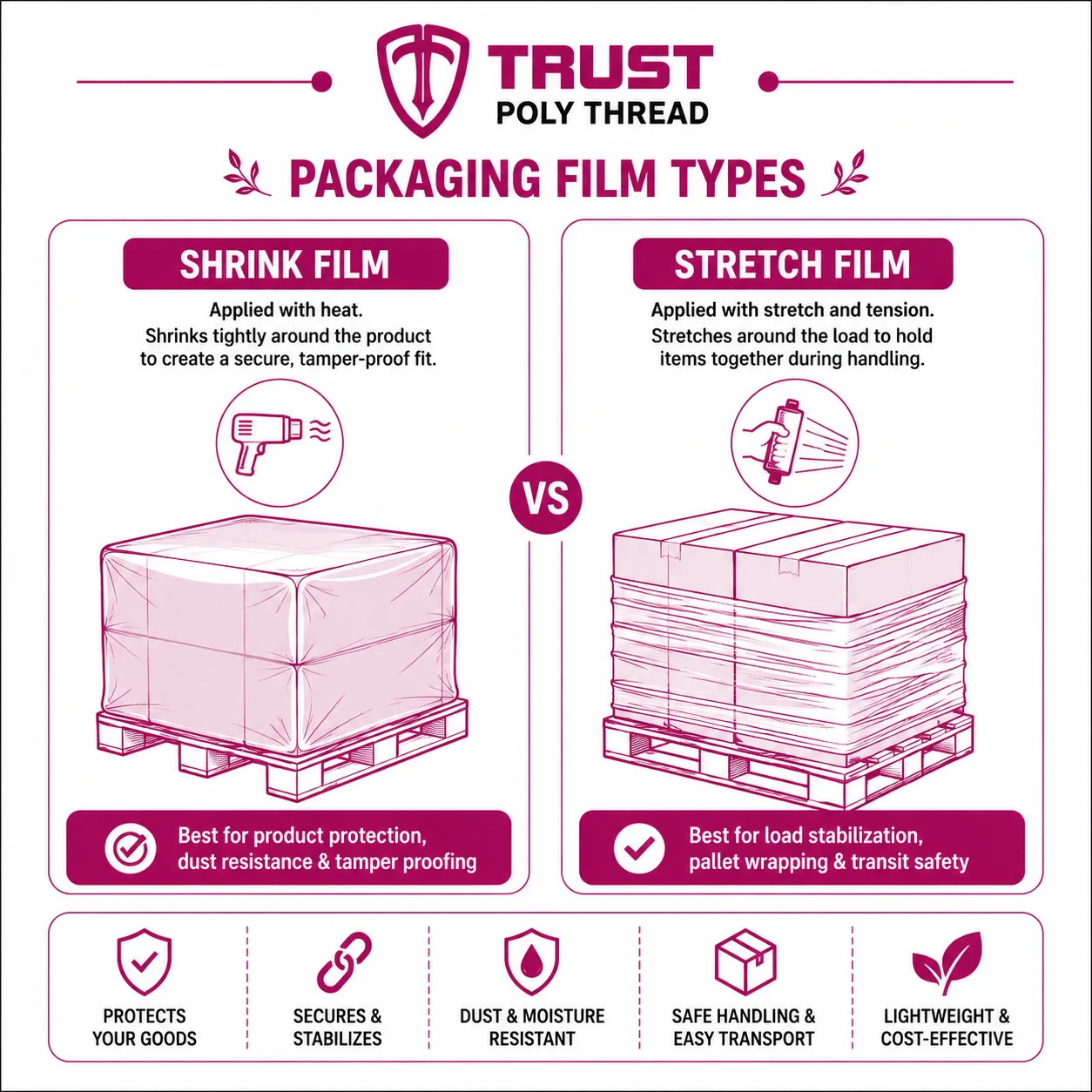
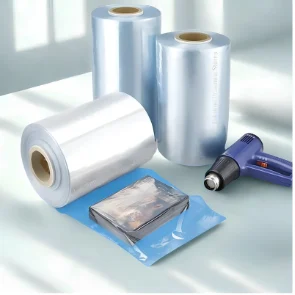
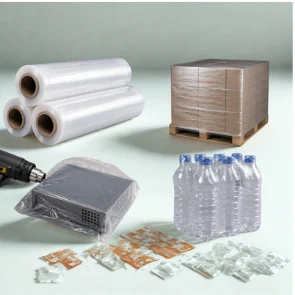
    Shrink film versus stretch film use case comparison

    POF Or PVC, And This Choice Actually Matters

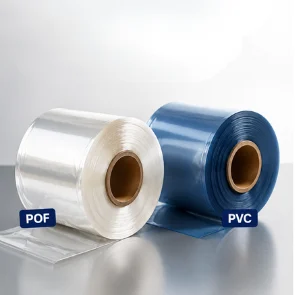
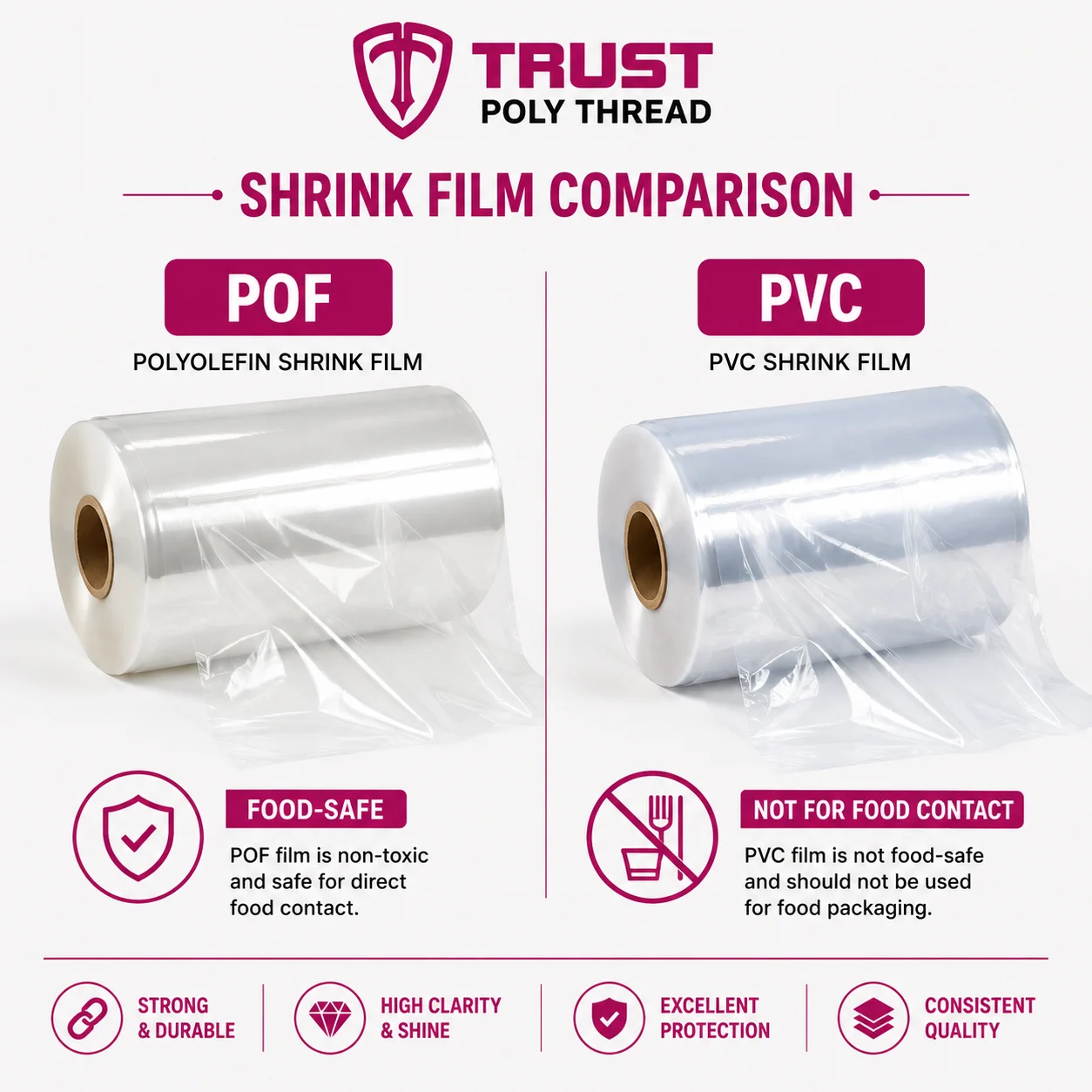
    POF, polyolefin, is the one to reach for if your product touches food, or if you care about what happens when the film gets heated during sealing. It's approved for direct food contact, doesn't release harmful fumes when sealed, and stays flexible even in cold storage conditions. It costs more than PVC, but for food, pharma or anything with a safety requirement, that's not really preferrable.

    PVC is cheaper and gives a similarly glossy, clear finish, which is why it's still common for non-food retail packaging, media cases and promotional bundles. The real drawback is what happens at the sealing stage: PVC releases hydrogen chloride gas when heated, which is unpleasant at best and a genuine safety and environmental concern at worst. It's also more prone to yellowing and going brittle over time, especially in cold conditions.

    So the honest answer to which one you should use usually comes down to one question. Does this touch food or anything sensitive, or does it need to survive cold storage? If yes, POF. If it's a dry retail item and cost matters more than anything else, PVC still does the job.
    hand grade machine grade stretch film

    Hand Grade Or Machine Grade Stretch Film, And Why The Difference Isn't Just The Name

    Hand grade stretch film is built to be pulled and wrapped by a person, usually on a handheld dispenser, and it's the right call for lower volume or irregular loads that doesn't justify a wrapping machine. Machine grade film is built for a rotating wrapping machine that applies consistent, controlled tension automatically, and it holds up better on high volume lines where hand-wrapping would be too slow or too inconsistent from one pallet to the next.

    Using hand grade film in a machine, or the reverse, doesn't just underperform. It tends to snap or wrap unevenly, since the two are built with different stretch characteristics for different application methods. Tell us how you're actually applying it, by hand or by machine, before you tell us the width you want.
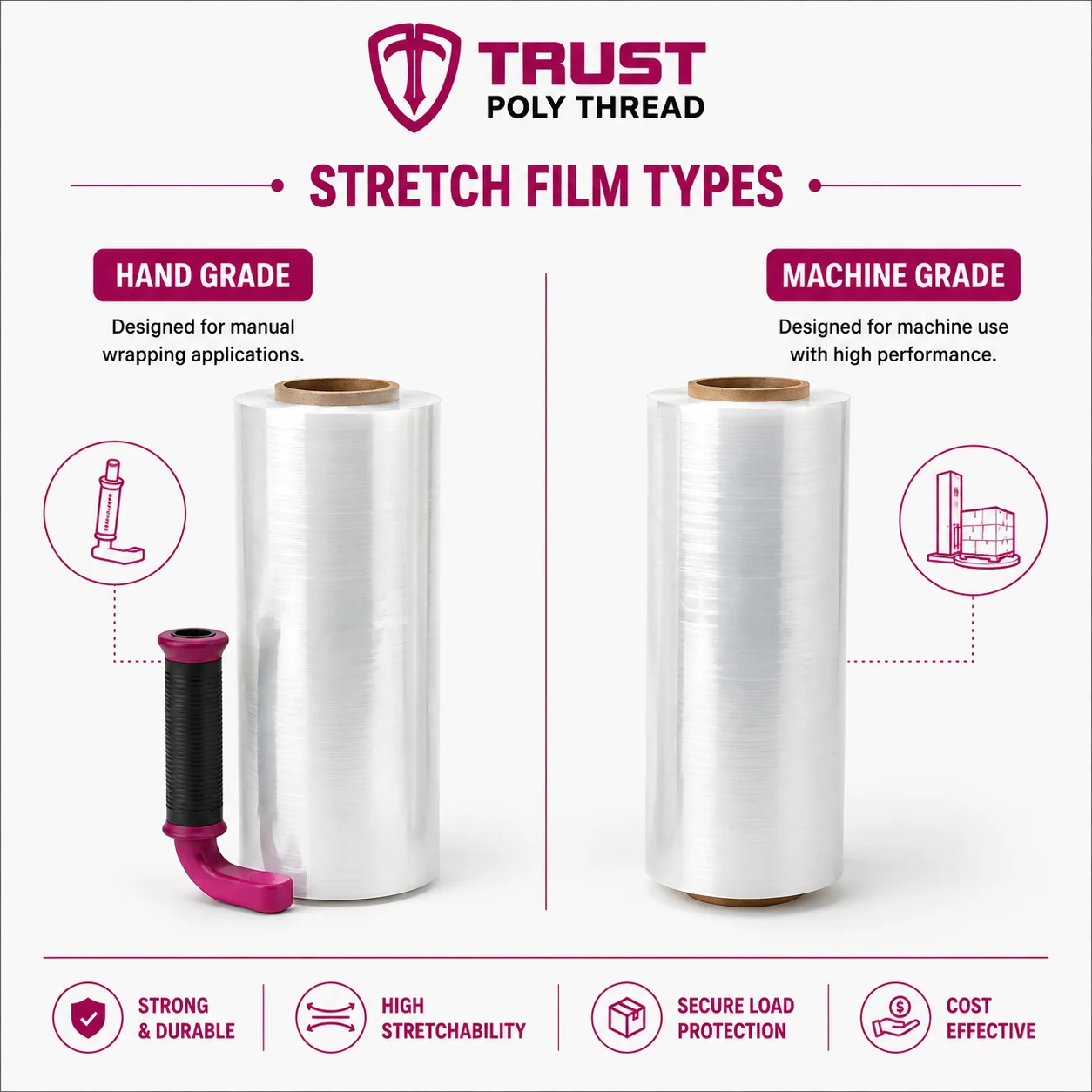
    Hand grade and machine grade LLDPE stretch film compared

    Cling, Elongation And Why They Matter More Than Micron Alone

    Cling is the film's ability to stick to itself once wrapped, which is what keeps a pallet load from unravelling without needing tape or a separate fastener. One-side cling suits most standard pallet wrapping. Two-side cling holds better on awkward or unstable loads but can be harder to work with by hand.

    Elongation, how far the film stretches before it holds firm, commonly runs up to around 300 percent on standard LLDPE stretch film. Higher elongation generally means better load containment per metre of film used, which is where the real cost saving in stretch wrapping actually comes from — using less film for the same holding force, not just buying a cheaper roll.

    Supplied, Not Manufactured In House

    Same as our film and tape range generally, we don't run our own blown film or cast film extrusion lines. Shrink film and stretch film use genuinely different production processes, blown film for shrink, cast film for stretch, which is part of why we source both rather than build either ourselves. We check consistency and construction before dispatch rather than just relaying whatever arrives. If you need a highly specialised grade or an unusual custom treatment, we'll tell you honestly if that's outside what we can reliably source.

    Who Actually Uses This From Us
    LLDPE stretch film compared

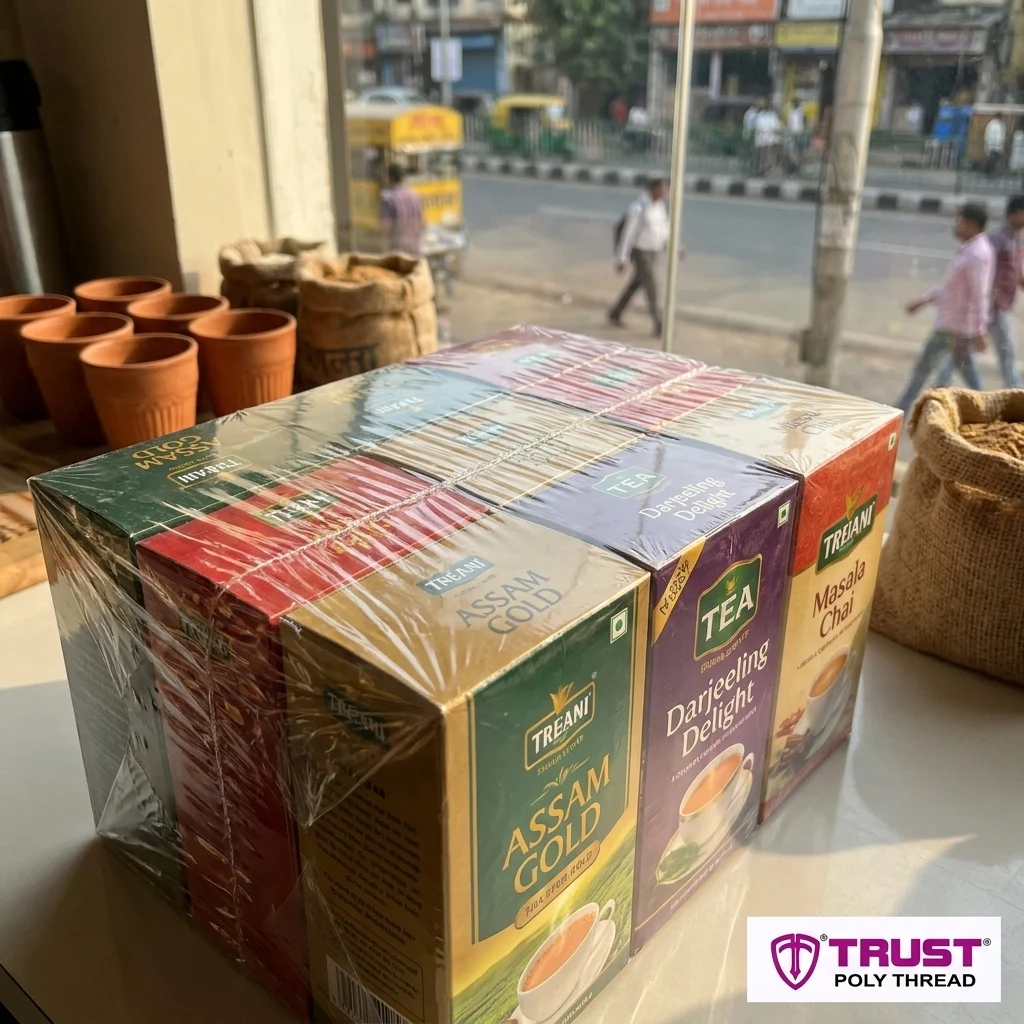
    Tea packers are a natural fit for shrink film specifically, and it's often the same buyers already taking tags and envelopes from us for the same product line. POF shrink wraps individual tea packets or bundles multiple boxes for retail display. Stretch film sees more use among rice and flour mills moving palletised stock in bulk, where securing a loaded pallet matters more than individual product presentation. Snack, FMCG and general warehouse operations round out the rest of both product lines.

    It's genuinely common for one buyer to need both, just for different parts of their operation. A flour mill might shrink-wrap retail-facing multipacks with POF for the shelf, while stretch-wrapping the same product palletised in bulk for onward transport to a distributor. Same order, two different films, two different jobs.

    Demand for shrink film tracks the tea season fairly closely. Stretch film demand is steadier through the year, tied more to general dispatch volume than any single harvest window, though it does pick up around the same November period as our thread and tape business, since more mills are moving palletised stock once the Aman harvest comes in.
    How Ordering Actually Works

    For shrink film, tell us what you're packing, whether it touches food, and how the finished pack travels afterwards. For stretch film, tell us whether you're wrapping by hand or by machine, your typical load size, and your width requirement. We'll recommend the right film and specification based on that, not based on what's cheapest to source. Once confirmed, we dispatch from Kolkata, alongside thread, tape or other film if you're ordering those too.

    Questions We Get Asked About Shrink And Stretch Film

    What's the actual difference between shrink film and stretch film?

    Shrink film needs heat to tighten around whatever it's wrapping, and it's used to bundle or present individual products. Stretch film wraps under mechanical tension with no heat involved, and it's used to secure a stacked pallet load for transport. They're not interchangeable, and using one for the other's job generally fails.

    Which one do I need for pallet wrapping?

    Stretch film. It's built specifically to secure a loaded pallet under tension so it survives handling and transport without shifting. Shrink film isn't designed for this and won't hold a pallet load the way stretch film does.

    Which one should I use for bundling multiple products together for retail?

    Shrink film, generally. It tightens to the exact shape of the bundle under heat, giving a clean, shelf-ready finish that stretch film doesn't replicate in the same way.

    What's the real difference between POF and PVC shrink film?

    POF is approved for direct food contact, doesn't release harmful fumes when heated, and stays flexible in cold storage. PVC is cheaper and equally glossy, but releases hydrogen chloride gas when sealed and isn't recommended for food contact.

    Should I choose hand grade or machine grade stretch film?

    It depends entirely on how you're applying it, not on which sounds more premium. Hand grade suits lower volume or irregular loads wrapped manually. Machine grade suits consistent, higher volume pallet wrapping on a rotating machine. Using the wrong one for your application method causes snapping or uneven wrapping.

    What micron thickness should I choose for stretch film?

    Standard LLDPE stretch film commonly runs from around 8 to 35 microns, with the right choice depending on your load weight and how sharp or irregular the load's edges are. Heavier, sharper loads need a higher micron to avoid punctures. Tell us your typical load and we'll suggest a starting point.

    What's one-side versus two-side cling, and which do I need?

    One-side cling suits most standard pallet wrapping, where the film sticks to itself but not to the product surface. Two-side cling holds better on awkward or unstable loads but can be trickier to apply by hand. Tell us what you're wrapping and we'll confirm which fits.

    What's the HSN code and GST rate for stretch film?

    Stretch film generally falls under HSN 3920, the same broad plastics classification as our other films, and it attracts 18 percent GST. This wasn't affected by the September 2025 reform that changed rates for some other product categories. Confirm the specific 8-digit code with your accountant based on your exact film composition.

    What's the HSN code and GST rate for shrink film?

    Shrink film, whether POF or PVC, also generally falls under HSN 3920 and attracts 18 percent GST, unaffected by the recent reform that dropped rates for man-made yarn and sewing thread. This is a different chapter and a different rate to our thread products, so don't assume the two carry the same tax treatment on one invoice.

    Can I get custom widths for either film?

    Yes, both are cut to your specification rather than sold off a fixed size chart. Tell us your machine or application width requirement and we'll confirm what's realistic.

    Is POF or LLDPE stretch film food safe?

    POF shrink film is available in food-contact-approved grades and is the right choice for anything touching food directly. Stretch film isn't typically used in direct food contact the way shrink film sometimes is, since its job is securing an outer pallet load rather than wrapping an individual product, but tell us your exact application and we'll confirm what's suitable.

    What's the minimum order quantity for shrink or stretch film?

    It depends on the width, micron and grade combination, since custom cuts carry a different minimum than commonly stocked specifications. Tell us your requirement and quantity and we'll confirm a realistic number rather than a generic figure.

    Can I order a small trial quantity before a full roll commitment?

    Yes, and for a first order we'd suggest it for either film. Testing shrink or stretch behaviour on your own equipment before committing to a full roll run saves a bigger problem later.

    Do you supply both films alongside thread, tape and machines on one order?

    Yes. A lot of our regular buyers already order thread, tape or other film from us, and shrink or stretch film typically joins the same purchase order and dispatch rather than needing a separate delivery.

    Does stretch film need a wrapping machine, or can it be applied by hand?

    Both are genuinely common. Hand grade film is built for manual application on a handheld dispenser, suited to lower volume or irregular loads. Machine grade suits a rotating wrapper for higher, more consistent volume. Tell us your actual setup and we'll recommend the right grade.

    Can stretch film be coloured or printed?

    Coloured stretch film is available, sometimes used to colour-code different product lines or departments in a warehouse. Printed stretch film is less common but possible against a larger order. Tell us your requirement and we'll confirm what's realistic.

    Talk to us before you order

    A two-minute call usually settles it faster than an email back-and-forth.