
Bag Closing Polypropylene Thread
Table of Contents ▼
Polypropylene Bag Closing Thread For Rice, Feed And Fertiliser Sacks
We manufacture polypropylene bag closing thread in three articles, TP-112, TP-1250 and TP-1260, across 500 to 1500 denier, wound and wax lubricated on our own floor in Kolkata. If you're closing woven PP or HDPE sacks under 50 kilos, rice, fertiliser, feed or similar, this is usually the more cost-effective thread compared to polyester, without giving up the strength most of these bags actually need.
Our Three Articles, Straight Up
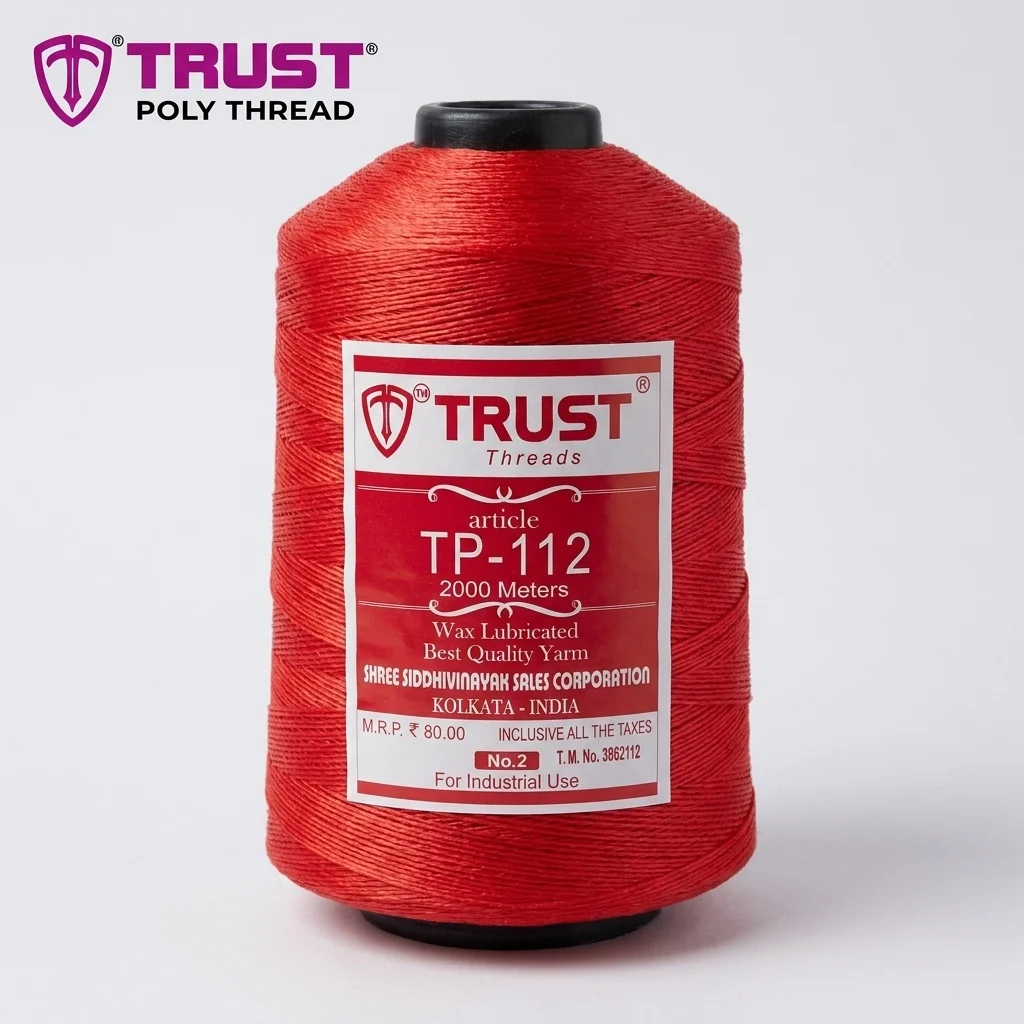
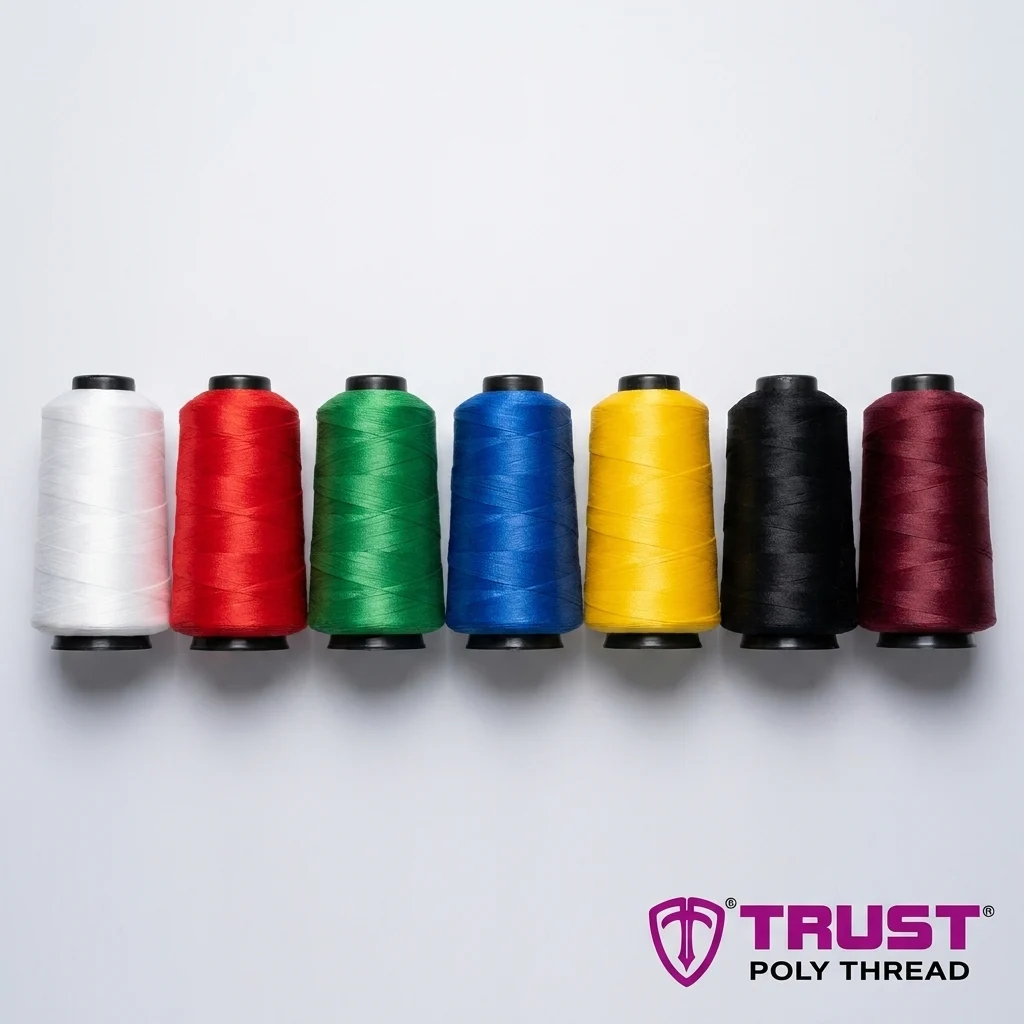
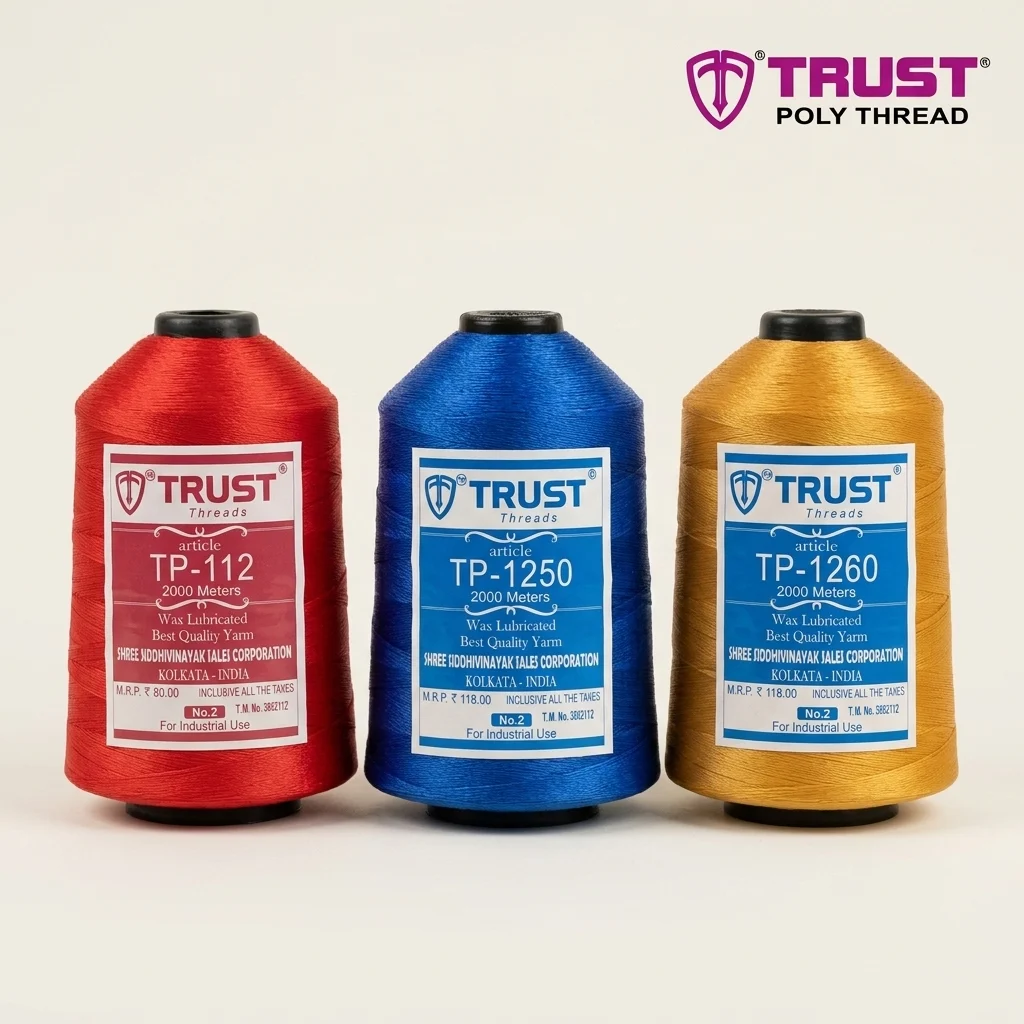
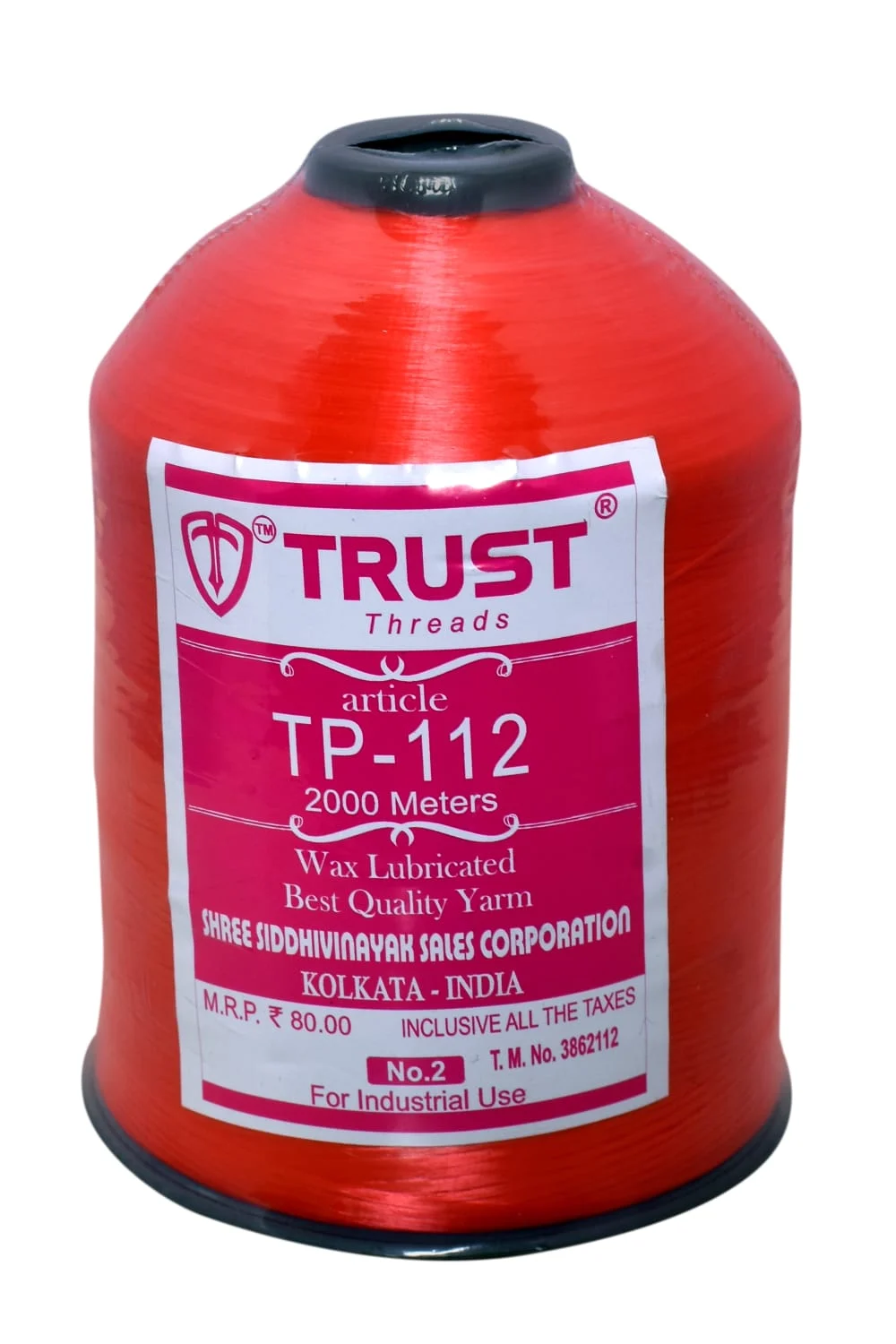
TP-112 is our single-ply article, 840 denier, 6 GPD strength, in 2000 metre cones, and it comes in seven colours: white, red, green, blue, yellow, black and maroon. It's also the article we ship the most, alongside TP-1260.
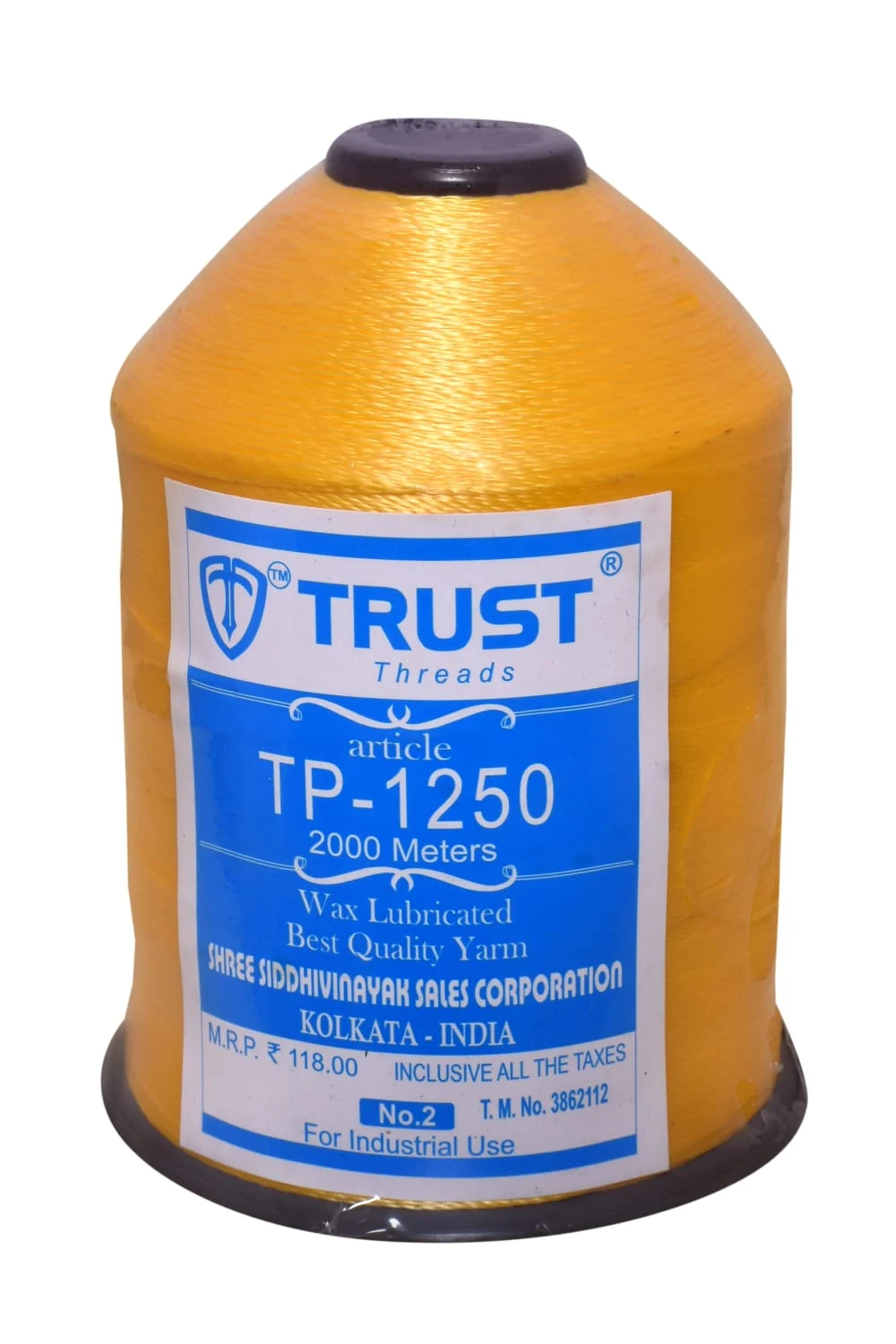
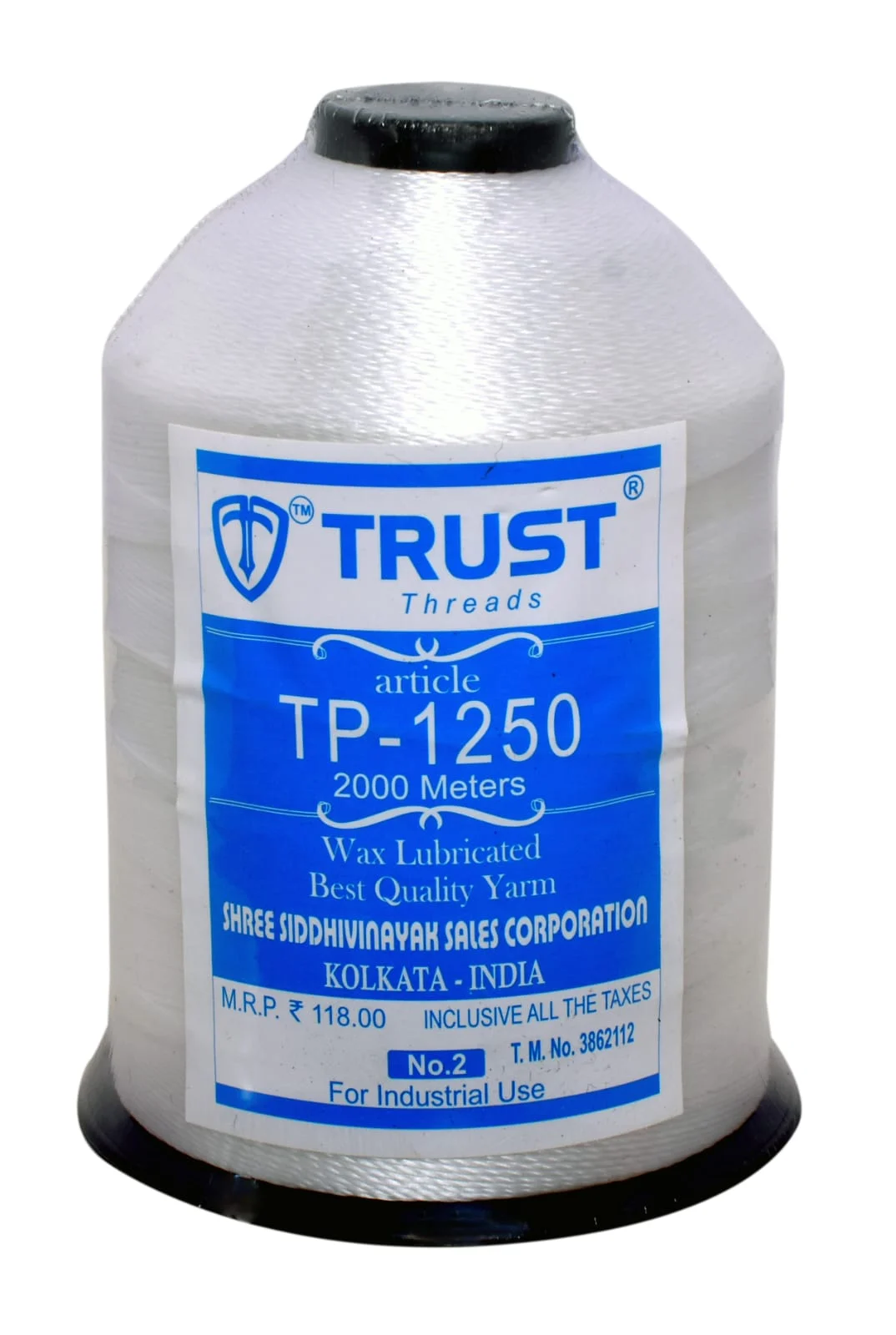
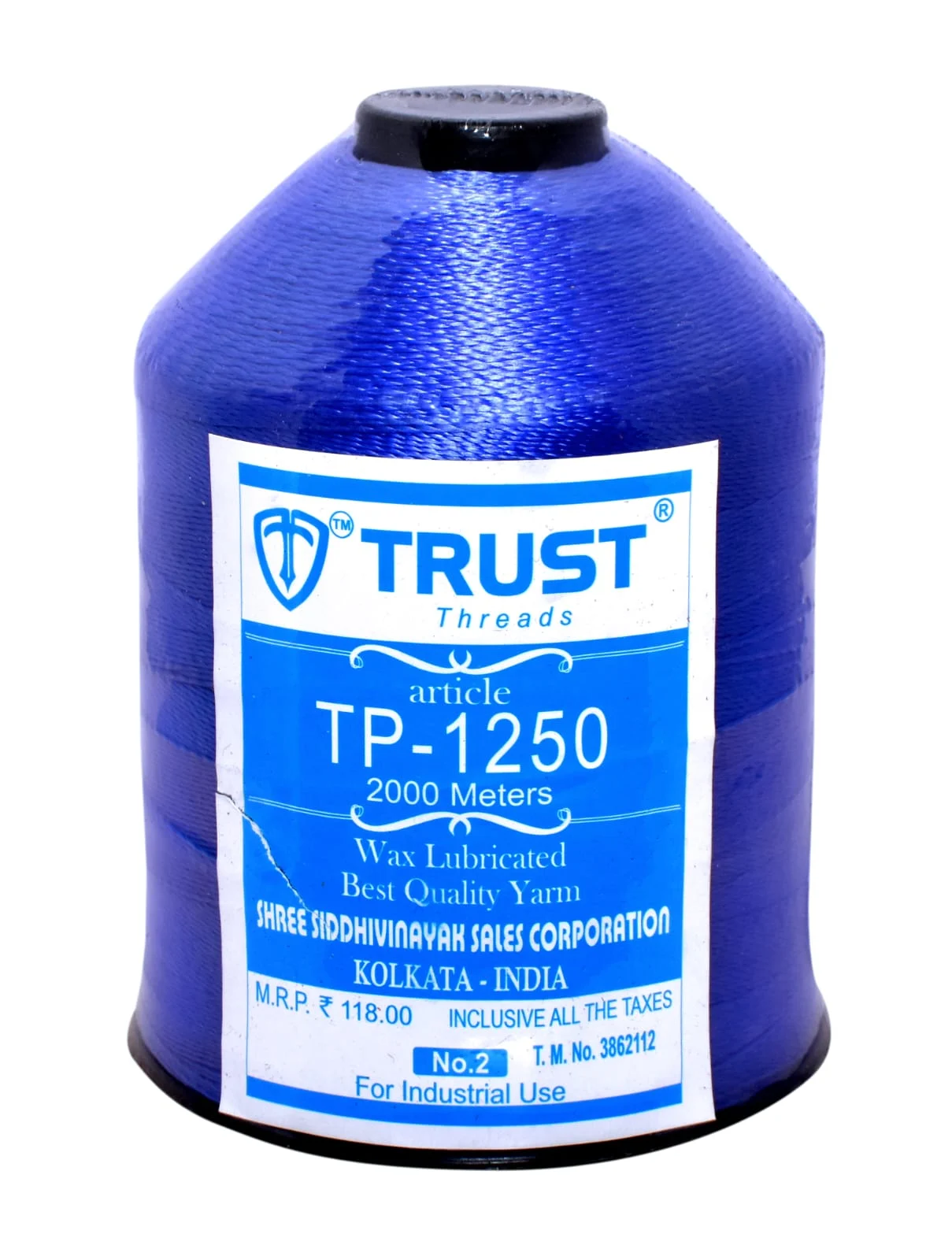
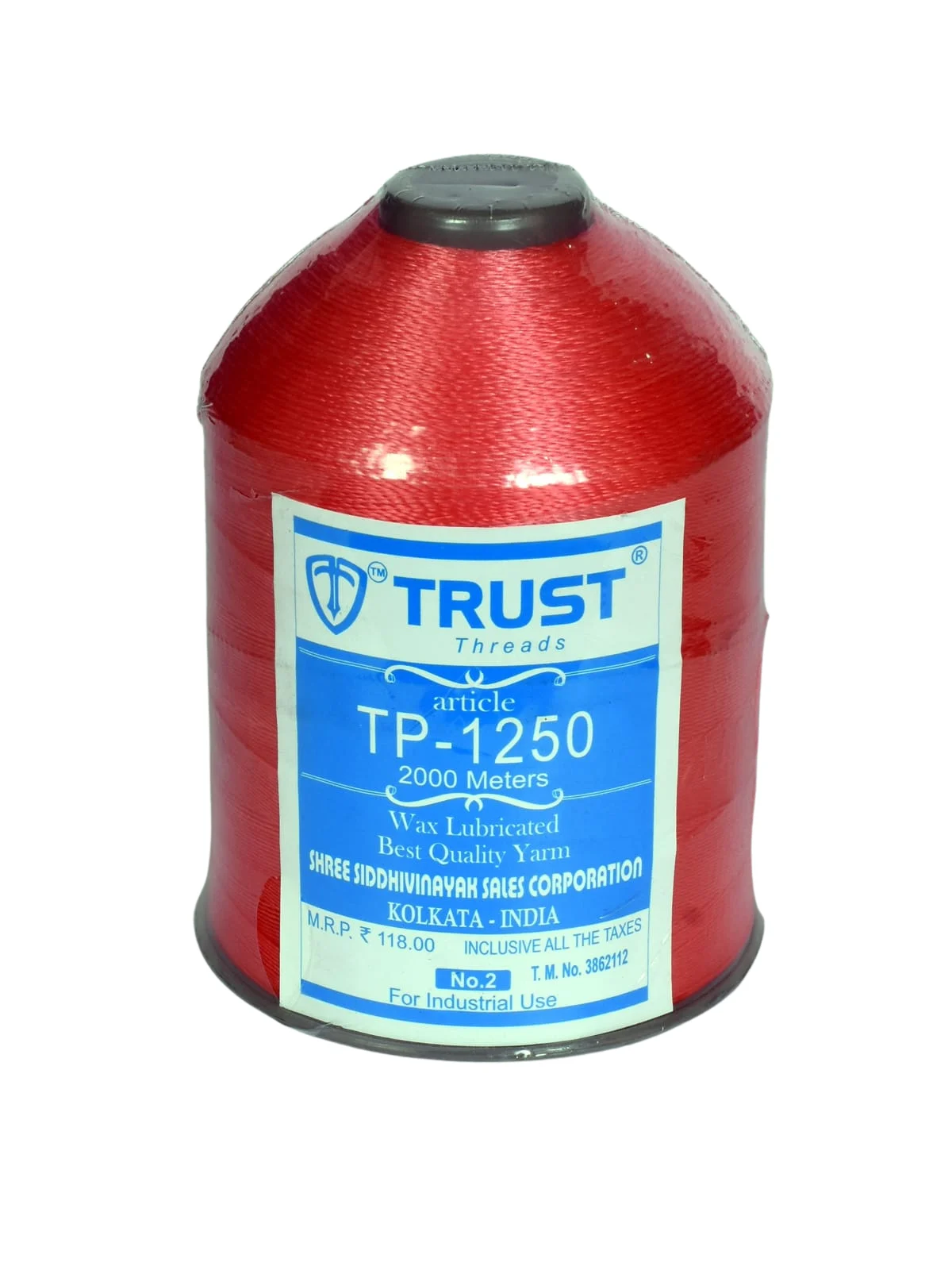
TP-1250 steps up to 2-ply at 500 denier, 6 to 8 GPD strength, in 2000 metre cones, available in white, red, green and blue. TP-1260 is our strongest standard article, 2-ply at 840 denier, 10 to 12 GPD strength, in 1000 metre cones, same four colours.
GPD stands for grams per denier, which is the strength-to-thickness ratio the trade actually measures thread by. A higher GPD means the thread holds more load for its weight, not just that it's thicker.
| Article | Ply | Denier | Strength | Length | Colours |
|---|---|---|---|---|---|
| TP-112 | Single-ply | 840 | 6 GPD | 2000 metre | White, red, green, blue, yellow, black, maroon |
| TP-1250 | 2-ply | 500 | 6 to 8 GPD | 2000 metre | White, red, green, blue |
| TP-1260 | 2-ply | 840 | 10 to 12 GPD | 1000 metre | White, red, green, blue |
Which Article Actually Fits Your Bag
TP-112 suits lighter, everyday closing work, most 25 to 30 kg woven sacks included, and it's the one to start with if you're not sure yet. TP-1250 is a step up in strength at a lighter denier than TP-1260, useful when you want 2-ply consistency without the extra bulk. TP-1260 is what mills reach for on 50 kg-plus sacks or anything getting rough handling during transport and stacking.
Getting this wrong doesn't usually mean the thread snaps immediately. More often, it holds for a while and then fails inconsistently, which is actually harder to diagnose than an outright break. That's the pattern worth watching for, not a sudden failure on day one. Tell us your bag weight and how it's handled after packing, and we'll match the article properly.
Seven Colours, And Why That's Not Just Decoration
White, red, green, blue, yellow, black and maroon are standard on TP-112. A lot of buyers use colour for batch identification. It marks a grade, a harvest date, or a specific customer's order, without printing anything extra on the bag itself. Running multiple products or grades through one packing line? Colour-coded thread is a genuinely useful, low-cost way to tell batches apart at a glance.
Jumbo Cones, For Buyers Running Real Volume
Beyond the three named articles, we also run jumbo cones from 500 to 1500 denier in any colour, for buyers who'd rather change cones less often than a small operation would. These aren't sold off a fixed size chart. Tell us your daily volume and denier requirement and we'll confirm what's realistic to produce and dispatch.
Polypropylene Or Polyester, If You're Deciding Between The Two
Polypropylene is lighter, resists moisture better, and costs less per cone, which is why it's the standard choice for rice, fertiliser and chemical sacks under 50 kilos. Polyester carries more raw tensile strength and holds up better under abrasion, which is why jute, gunny and heavier sacks usually call for it instead. If your bags are jute or running past 50 kilos regularly, our polyester range is probably the better fit, and we'd rather tell you that upfront than sell you the wrong material.
Who Actually Orders This From Us
Rice mills are our single biggest group of buyers for this range, especially through the Bardhaman, Nadia, Murshidabad and Hooghly belt where a large share of Bengal's Aman paddy gets milled and bagged. Fertiliser and animal feed packers make up most of the rest, generally favouring TP-1260 for the rougher handling their sacks go through between the mill and the retailer.
Demand tracks the Aman harvest closely. Once paddy starts coming in from November, our regular buyers are placing bigger, more frequent orders, and if you know you'll need stock through that window, ordering a few weeks ahead avoids competing with everyone else's last-minute rush.
What Actually Causes Most Complaints, In Our Experience
Ask around and you'll hear the same story from mill after mill: a batch of thread runs fine for weeks, then a new cone starts skipping stitches for no obvious reason. Almost every time, that traces back to wax lubrication or tension varying batch to batch. It's a manufacturing issue, not a sudden change in your own machine. We're not claiming perfection here. What we are claiming is that when something's off, it's traceable to our own floor, which means it's actually fixable rather than a mystery three vendors deep.
That consistency is worth more to most buyers than a marginally lower price per cone, though it rarely gets mentioned until after a bad batch from somewhere else has already cost a mill a day's packing time.
How Ordering Actually Works
Tell us your bag material, weight and roughly how it's handled after packing, and we'll recommend the article rather than take an order for whatever you first name. First-time buyers get a sample cone before any bulk order goes out, so you can test it on your own machine first. Once confirmed, we pack in proper cartons and dispatch from Kolkata. That last part matters more than buyers expect, since a crushed cone edge from loose packing can cause the same uneven unwinding problem as a manufacturing fault, on a thread that was otherwise fine. Contact us to get started.
Questions We Get Asked About Polypropylene Bag Closing Thread
What's the difference between TP-112, TP-1250 and TP-1260?
TP-112 is single-ply at 840 denier and 6 GPD strength. TP-1250 is 2-ply at 500 denier, 6 to 8 GPD. TP-1260 is 2-ply at 840 denier, 10 to 12 GPD, our strongest standard article. Heavier sacks and rougher handling generally call for TP-1260.
What does GPD mean, and why does it matter more than denier alone?
GPD stands for grams per denier, the strength relative to the thread's thickness. A higher GPD holds more load for the same weight of thread, which matters more than denier alone since two threads at the same denier can still differ in actual strength depending on how they're made.
Is polypropylene or polyester thread better for rice bags?
For most woven PP or HDPE rice sacks under 50 kilos, polypropylene is the more cost-effective choice and handles the job well. Once you're past 50 kilos regularly, or dealing with jute rather than woven PP, polyester generally holds up better. Tell us your exact bag and we'll confirm which fits.
What colours are available in polypropylene thread?
TP-112 comes in seven colours: white, red, green, blue, yellow, black and maroon. TP-1250 and TP-1260 come in four: white, red, green and blue. Jumbo cone orders can be run in any colour against a production minimum.
What's the price range for polypropylene bag closing thread?
Small cone pricing commonly runs somewhere in the ₹40 to ₹65 per piece range depending on article and denier, based on current market listings, though this shifts with raw material cost. Tell us the article and quantity and we'll confirm current pricing directly rather than quote an outdated figure.
What HSN code and GST rate apply to polypropylene thread?
Classification depends on whether it's treated as sewing thread, HSN 5401, or general synthetic filament yarn, HSN 5402, and the exact code can genuinely differ by product form. Both categories fall under the September 2025 GST reform that brought man-made filament yarn and sewing thread down to a flat 5 percent from the earlier 12 to 18 percent band. Confirm the precise code with your accountant for your specific invoice.
Can I get a custom denier or colour outside your standard range?
Since we manufacture rather than trade, a custom denier or colour is a production decision we can generally make ourselves, though it may carry a minimum quantity. Tell us the specification and volume and we'll confirm what's realistic.
How many bags will one cone close?
It depends on seam length and machine setting, but as a working figure, a 2000 metre TP-112 cone typically closes somewhere around 2,000 to 2,500 standard 25 to 30 kg sacks at a 25mm seam. Send us your exact bag dimensions for a proper number.
What's the minimum order quantity?
Standard articles ship from a single carton, so small buyers aren't forced into a container-load order. Custom denier, length or colour combinations carry a production minimum. Tell us the specification and we'll confirm the number.
Can I get a sample before ordering in bulk?
Yes, and for a first order we'd suggest it. We send a sample cone so you can test it on your own machine before committing to a full run.
Does polypropylene thread hold up in humid or wet storage conditions?
Polypropylene resists moisture better than many natural fibres, which is part of why it suits rice and grain packing. That said, keep cones dry and out of direct sunlight in storage regardless, since prolonged UV exposure can affect the outer layers over time.
Do you supply thread for fertiliser and animal feed sacks specifically?
Yes, TP-1260 in particular sees regular use here, since fertiliser and feed sacks tend to face rougher handling between the mill and the retailer than a typical rice sack does. Tell us your specific product and handling conditions and we'll confirm the right article.
Why does thread sometimes run inconsistently between batches from other suppliers?
This is almost always a wax lubrication or tension control issue at the point of manufacture rather than a fault in your machine. It's the exact reason we control both ourselves, cone to cone, rather than leave it to whoever wound the batch before.
Do you dispatch outside West Bengal?
Yes, nationwide. Being Kolkata based mainly means shorter transit for buyers in the East and North East, but we don't restrict supply to any one region.
Can I order polypropylene and polyester thread together on one invoice?
Yes. Several of our regular buyers run both, polypropylene for lighter woven sacks and polyester for jute or heavier ones, and order both together rather than splitting the purchase across two separate deliveries.
Is polypropylene thread suitable for automatic bag closing machines?
Yes, provided the denier and tension are matched to your machine. Tell us your machine type and bag weight together, since a mismatched tension setting can look exactly like a thread fault when it isn't one.
How should polypropylene thread be stored before use?
Keep cones dry and away from direct sunlight, ideally in a proper godown rather than an open yard. Polypropylene handles humidity reasonably well compared to some materials, but prolonged UV exposure over months of storage can still weaken the outer layers of a cone.
Will this thread work on an older bag closing machine I already own?
Generally yes, though older machines sometimes need their tension recalibrated when you switch denier or ply from whatever they were last running. Mention your machine's age and model if you're switching articles, and we'll flag anything worth checking before your first full run.
Do you offer better terms for repeat or seasonal bulk orders?
Once there's a trading history and a predictable seasonal pattern, particularly around the Aman harvest window, that's a fair conversation to have. Tell us if you're planning recurring volume and we'll factor that into pricing and priority for your account.
Can I mix colours within a single bulk order?
Yes, most buyers running batch identification by colour do exactly this, ordering several colours across one purchase order rather than one colour at a time. Tell us the split you need across colours and quantities and we'll confirm it as a single dispatch.
Talk to us before you order
A two-minute call usually settles it faster than an email back-and-forth.