
Content Map
Polyester Bag Closing Thread Built For The Heavier Bags
We manufacture polyester bag closing thread in three articles, TP-308, TP-312 and TP-412, all virgin fibre, all wound and wax lubricated on our own floor in Kolkata. If your bags are jute, gunny, or anything running 50 kilos and up, this is usually the thread that holds, where a lighter polypropylene thread starts to give way.
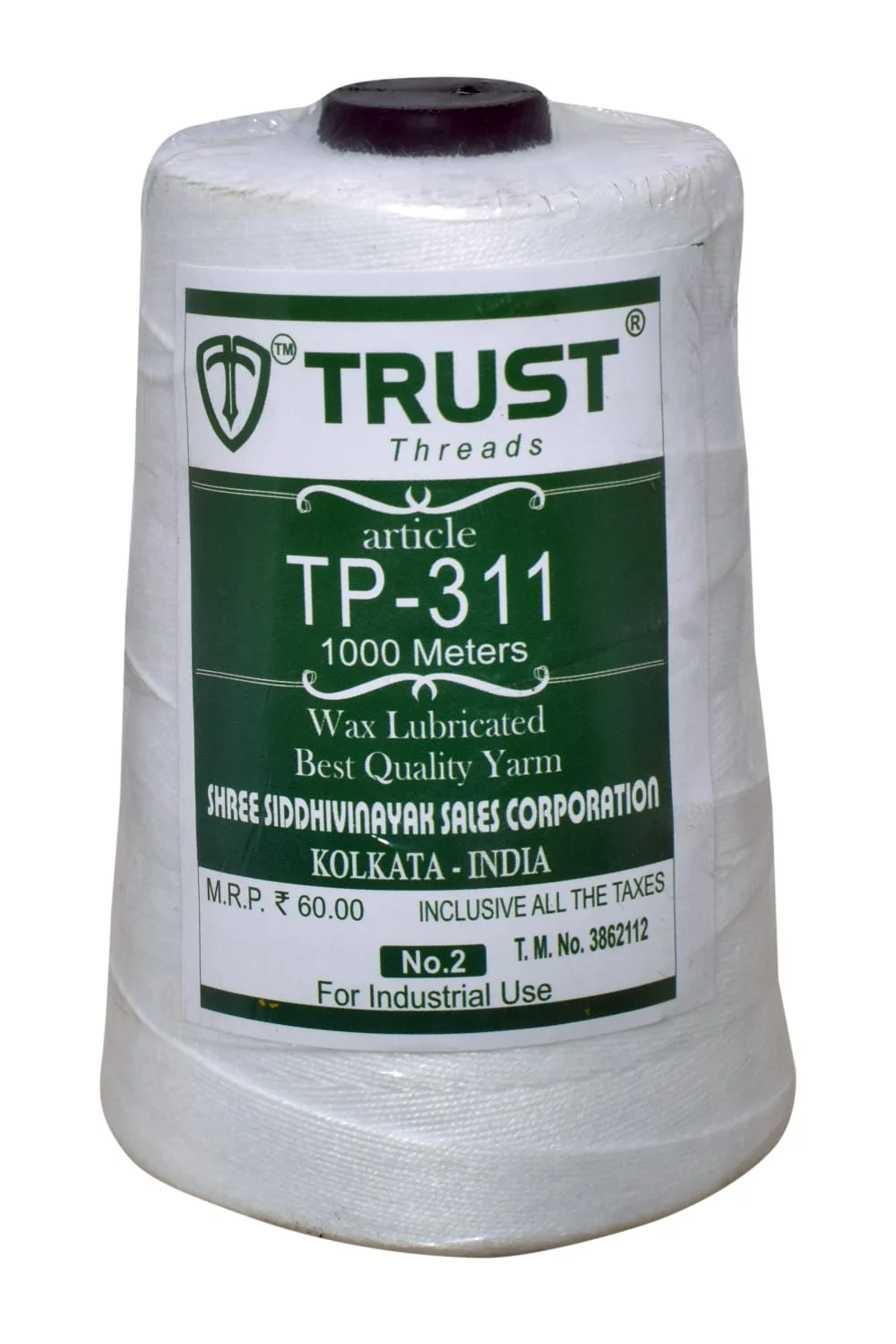
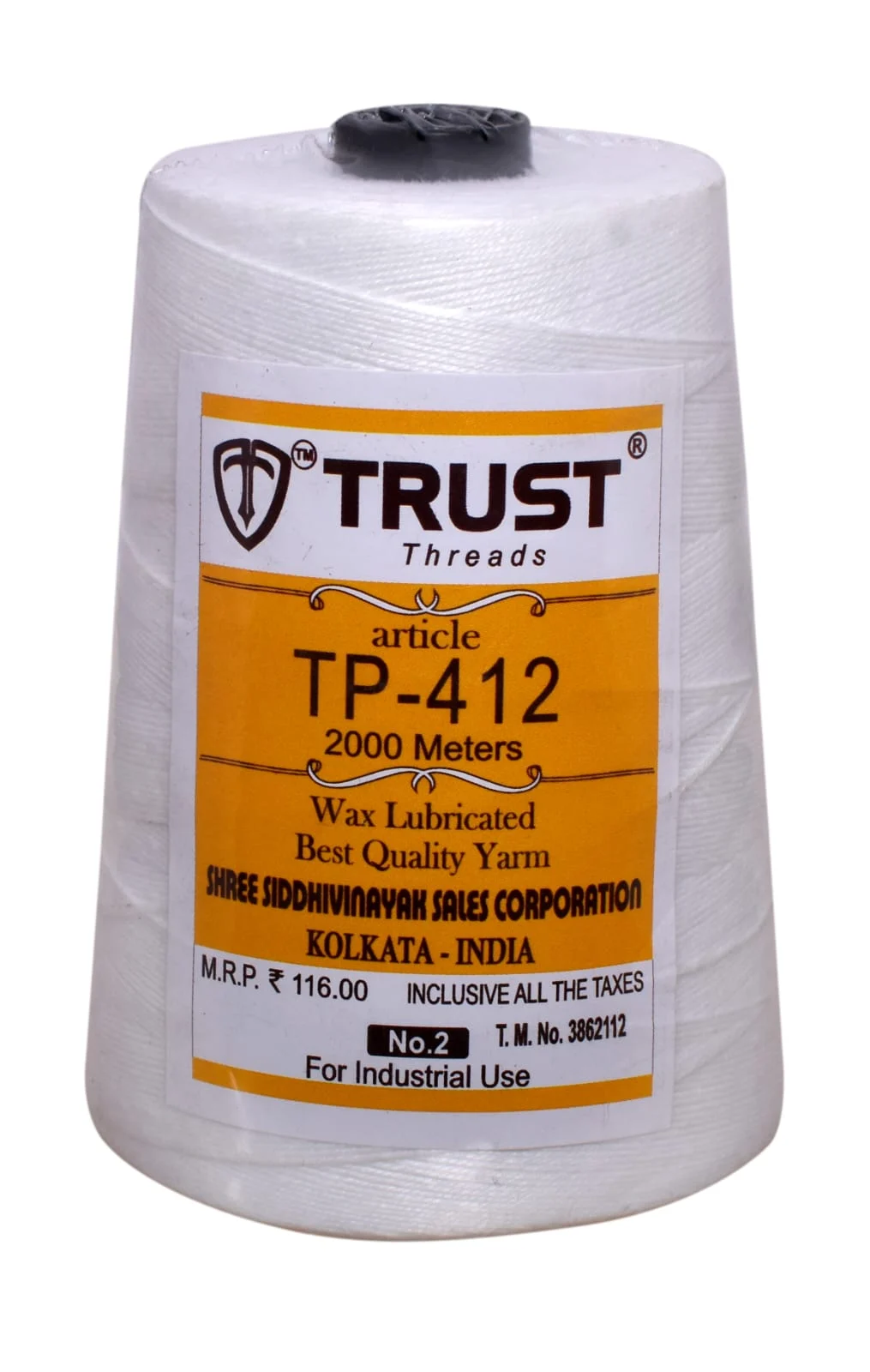
Our Three Articles, Straight Up
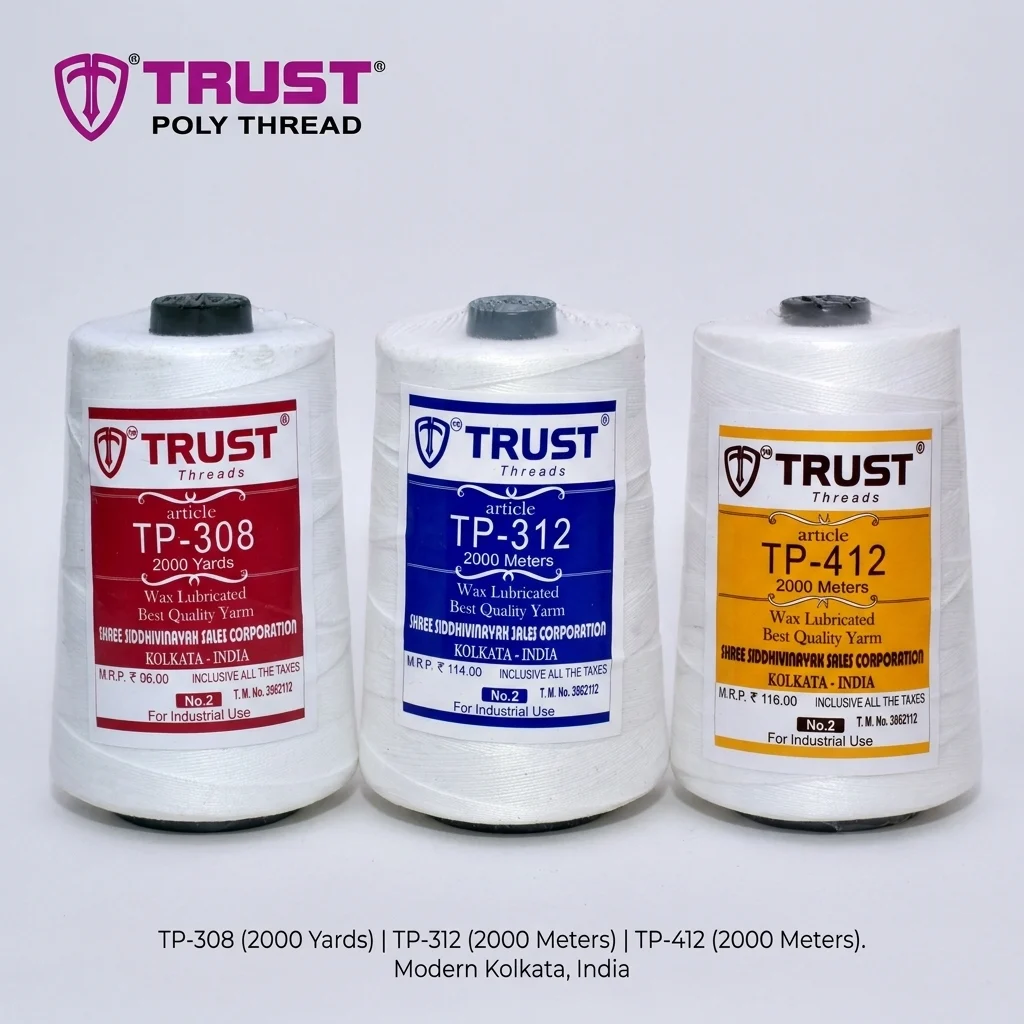
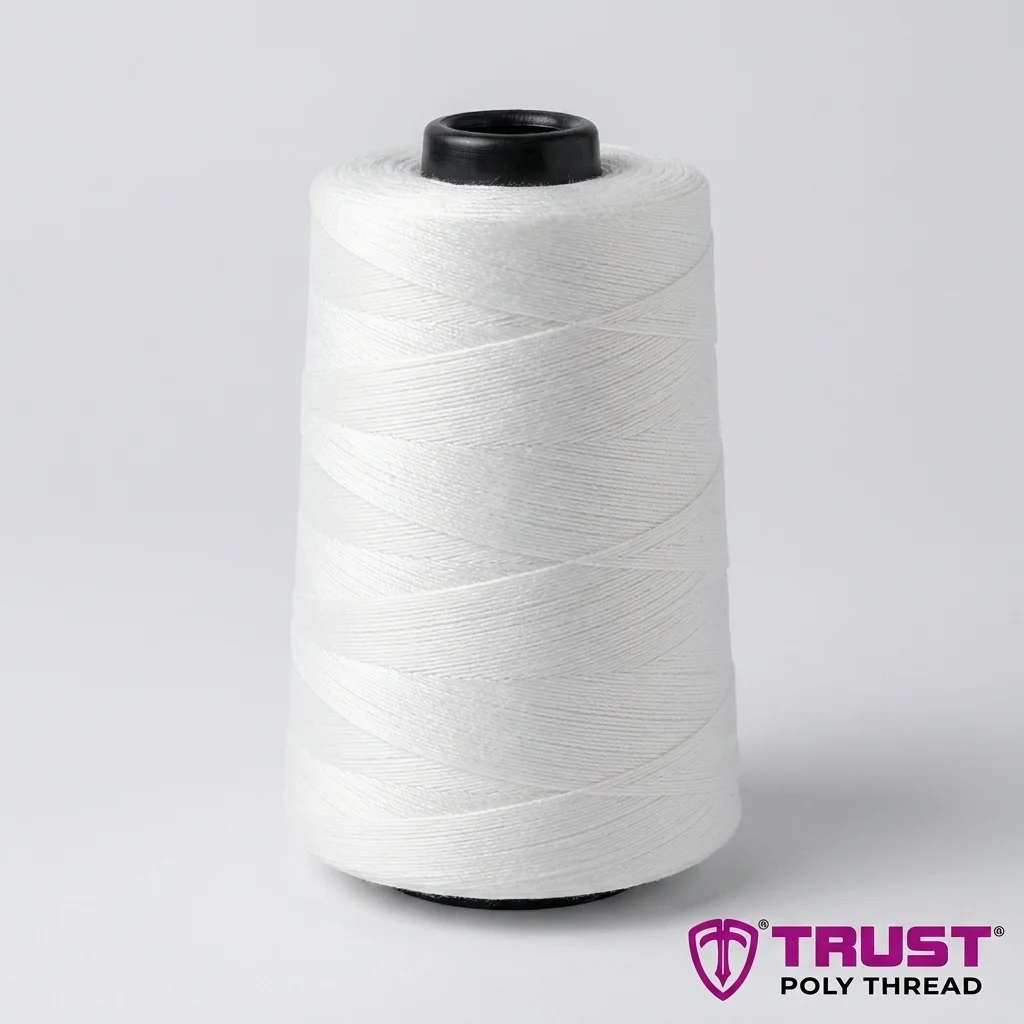
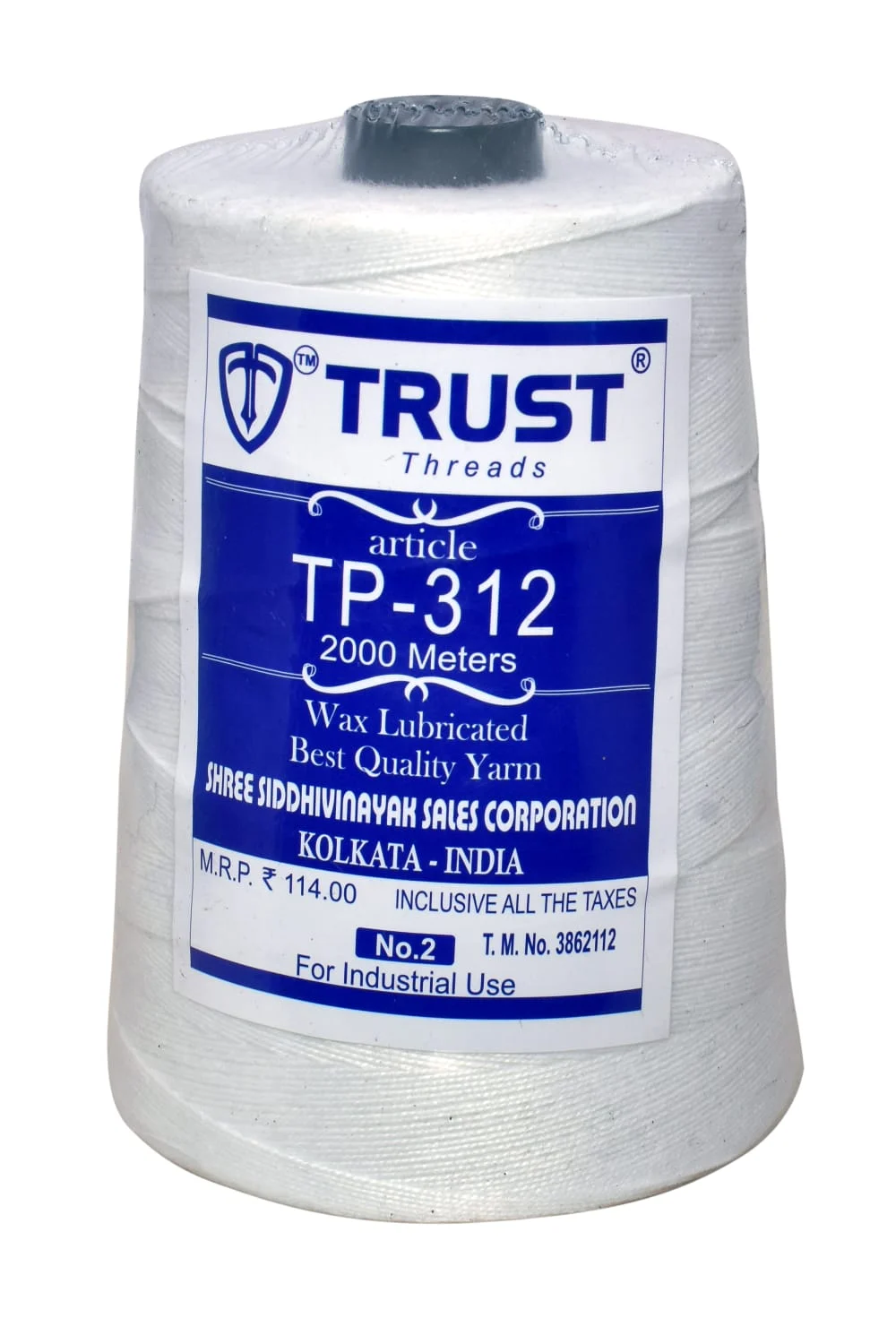
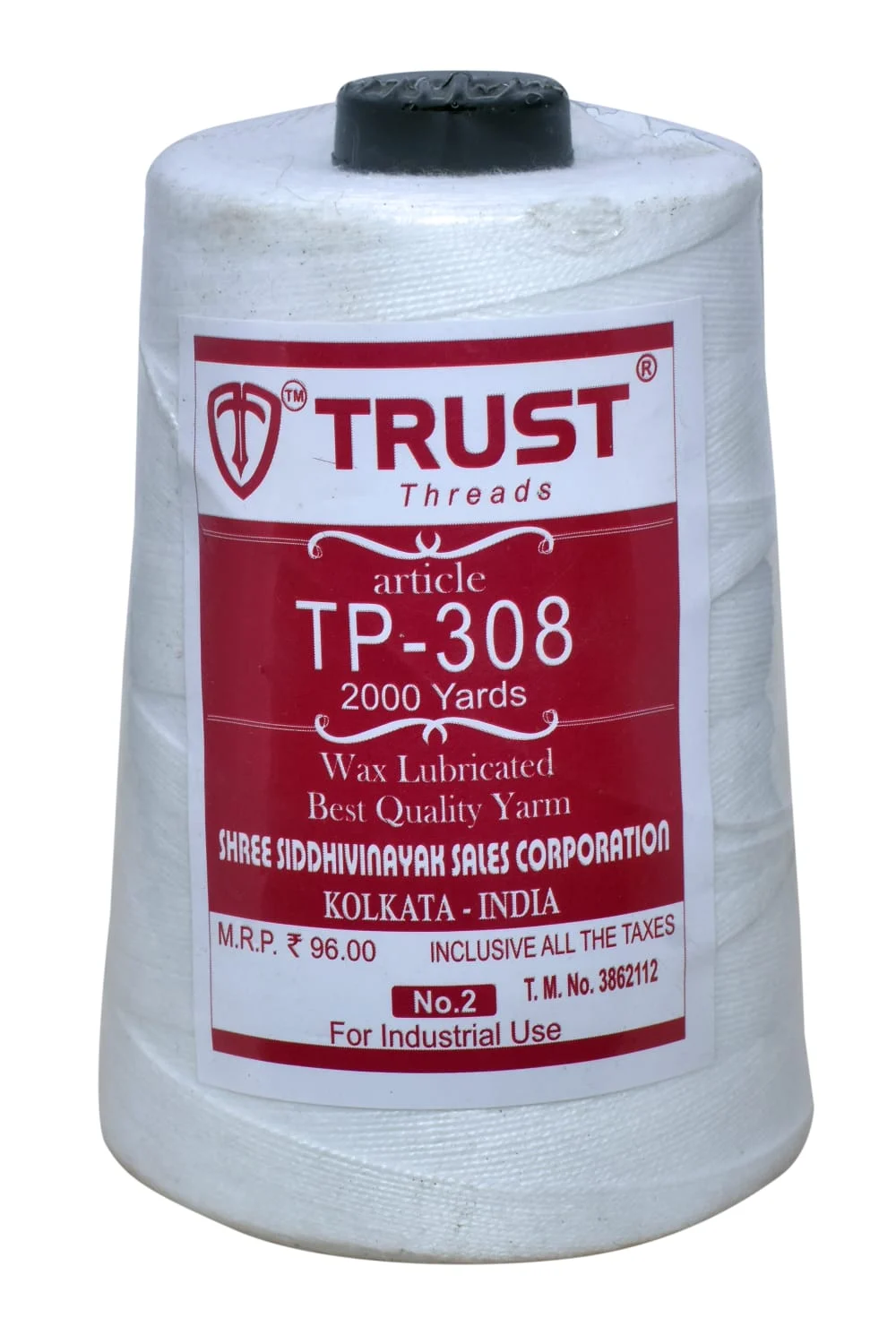
TP-308 runs 3-ply at 25 kg strength, in 1600, 1830 or 2000 metre lengths. TP-312 is also 3-ply but at 20 kg strength, in 1830 or 2000 metre lengths. TP-412 steps up to 4-ply at 25 kg strength, again across 1600, 1830 and 2000 metre options. All three come in white, and all three are virgin fibre, not recycled.
The difference between TP-308 and TP-312 is strength at the same ply count, so if your bags are lighter or your seams shorter, TP-312 does the job for less. TP-412's extra ply is what you reach for when 25 kg at 3-ply still isn't holding on your heaviest sacks.
| Article | Ply | Strength | Lengths Available | Material |
|---|---|---|---|---|
| TP-308 | 3-Ply | 25 & 50 kg | 1600m, 1830m, 2000m | Virgin Fibre (White) |
| TP-312 | 3-Ply | 25 & 30 kg | 1830m, 2000m | Virgin Fibre (White) |
| TP-412 | 4-Ply | 25 & 50 kg | 1600m, 1830m, 2000m | Virgin Fibre (White) |
*Note: We also do customize the thread Strength & Lengths as per client requirements.
Why Ply Count Actually Changes The Outcome
More plies means more individual strands twisted together into one thread, and that changes two things at once: raw strength, and how the thread behaves under a sewing machine's tension. A 4-ply thread like TP-412 handles rougher, heavier fill without snapping mid-seam, but it also needs your machine's tension set correctly for the thicker profile, or you'll get skipped stitches regardless of how strong the thread itself is.
This is the part buyers skip and regret. Don't just ask for "the strongest thread." Tell us your bag weight and your machine, and we'll tell you which ply count actually matches, because the wrong tension setting on the right thread looks exactly like the wrong thread.
Virgin Fibre, And Why We Don't Use Recycled
Our polyester range is virgin fibre from the beginning, not reprocessed or regrind material. Virgin fibre holds more consistent strength from cone to cone, which matters more than it sounds once you're running the same article for months. Recycled polyester thread exists in the market and it's usually cheaper, but the consistency trade-off shows up eventually, often as a cone that ran fine for weeks and then didn't.
We're not saying recycled thread is always bad. We're saying we don't stock it, and if consistency across a long production run matters to you, that's worth knowing upfront rather than finding out the hard way.
Jumbo Cone Variants, Explained Properly
Beyond the three named articles above, we also run jumbo cones from 48 to 60 kilos per bag, in count and ply combinations of 3/10, 3/12, 3/15, 4/10, 4/12 and 4/15. The first number is the ply. The second is the yarn count, and a higher count number means a finer, thinner strand at that same ply, not a thicker one. So 3/15 is a lighter thread than 3/10, even though both are 3-ply.
Jumbo cones suit buyers running high daily volume who'd rather change cones less often than a small buyer would. If you're not sure which count fits your bag weight, that's a completely normal question, not a sign you should already know. Tell us the bag and we'll tell you the count.
Polyester Or Polypropylene, If You're Deciding Between The Two
Polypropylene is lighter, handles moisture better, and costs less per cone, which is why it's the common choice for rice, fertiliser and chemical sacks. Polyester carries more raw tensile strength and holds up better under abrasion, which is why jute, gunny and heavier 50 kg-plus sacks usually call for it instead. If you're closing woven PP sacks under 50 kg, our polypropylene range is probably the more cost-effective fit, and we'll say so rather than sell you the more expensive option out of habit.
Who Actually Orders This From Us
Jute and gunny bag users make up a good share of our polyester buyers, alongside mills packing heavier 50 kg-plus sacks where polypropylene starts to feel marginal. We've also had buyers switch to us specifically because a previous polyester supplier's cones ran inconsistent between batches, which is exactly the wax lubrication and tension control problem we mentioned above. Consistency is genuinely the whole pitch here, not a line we put on the page.
There's a seasonal pattern here too, similar to what we see across our thread business generally. Jute bag demand tends to track the same Aman paddy season that drives our polypropylene orders, since a fair number of mills split their sack material between jute and woven PP depending on what a particular buyer wants. If you know you'll need polyester thread through the November harvest window, ordering a few weeks ahead avoids competing with everyone else's last-minute order at once.
How We Actually Make It
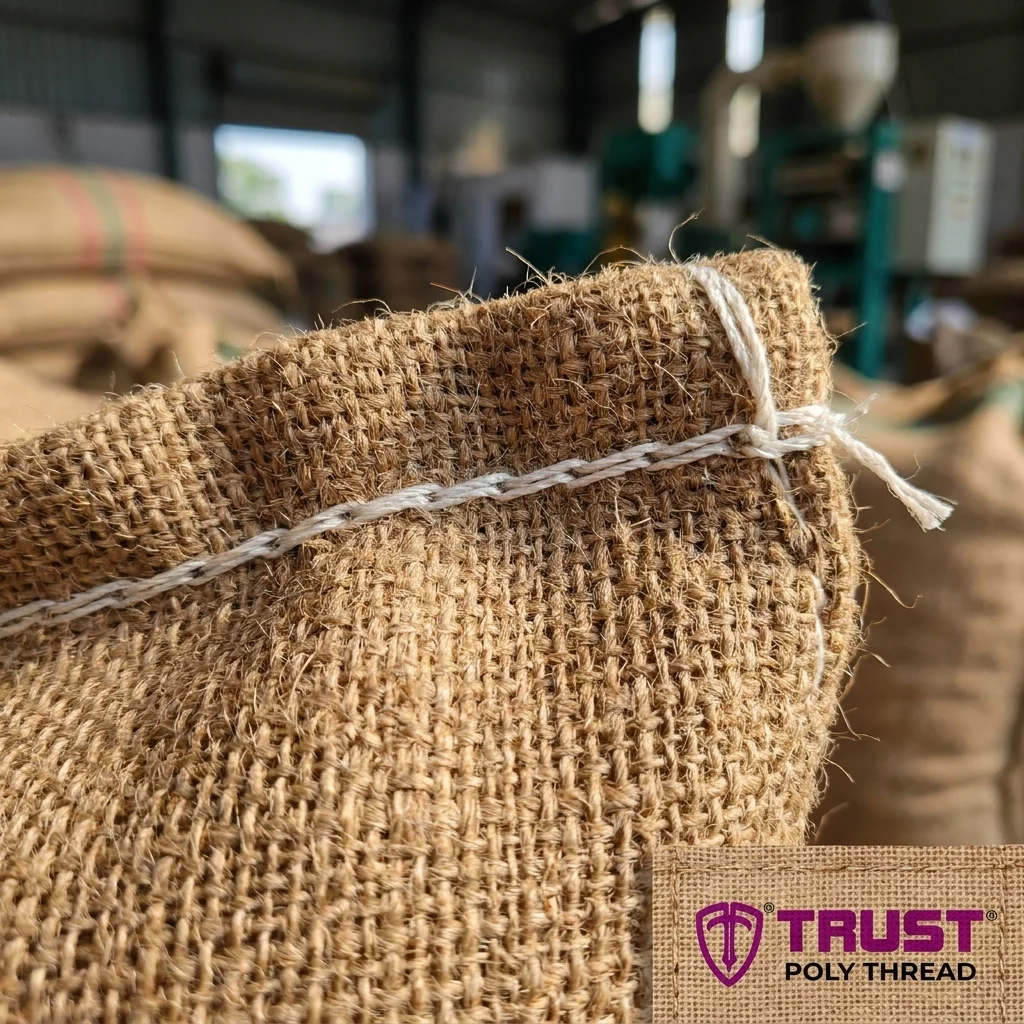
Every cone gets the same tension and wax lubrication control on our own floor, which is the entire reason we manufacture instead of trade. When a buyer asks for a custom length outside our standard 1600, 1830 or 2000 metre options, that's a production decision we make ourselves. A trading company selling someone else's thread has to relay that request upstream and often comes back with no.
How Ordering Actually Works
Tell us your bag material and weight, and we'll recommend the article and ply count rather than take an order for whatever you first name. First-time buyers get a sample cone before any bulk order goes out, so you can run it on your own machine and check the tension before committing. Once confirmed, we pack in proper cartons and dispatch from Kolkata. For more details on compatible equipment, see our machines page or contact us directly.
Questions We Get Asked About Polyester Bag Closing Thread
What's the difference between TP-308, TP-312 and TP-412?
TP-308 and TP-312 are both 3-ply, but TP-308 holds 25 kg strength against TP-312's 20 kg. TP-412 moves up to 4-ply at 25 kg strength. Heavier or rougher bags usually call for TP-412. Lighter loads can often get away with TP-312 at a lower cost.
Is polyester or polypropylene thread stronger?
Polyester generally carries more raw tensile strength and holds up better under abrasion, which is why it's the common choice for jute and heavier 50 kg-plus sacks. Polypropylene is lighter and handles moisture well, suiting rice, fertiliser and lighter woven sacks. Tell us your bag weight and material and we'll say which one actually fits.
What does "virgin fibre" mean, and why does it matter?
Virgin fibre is polyester made from new material rather than reprocessed or regrind stock. It holds strength more consistently from cone to cone, which matters most on long production runs where a sudden weak batch causes real downtime. Our polyester range is virgin fibre throughout, not recycled.
What do the jumbo cone numbers like 3/10 or 4/12 actually mean?
The first number is the ply count. The second is the yarn count, where a higher count number means a finer, thinner thread at that ply, not thicker. So 3/15 is lighter than 3/10, despite both being 3-ply. Tell us your bag weight if you're unsure which count you need.
What length options are available?
TP-308 and TP-412 come in 1600, 1830 or 2000 metre cones. TP-312 comes in 1830 or 2000 metres. Jumbo cones run by weight instead, from 48 to 60 kilos per bag, across the count and ply combinations listed on this page.
What's the price range for polyester bag closing thread?
Bulk polyester bag closing thread in the market commonly runs somewhere in the ₹190 to ₹200 per kilogram range, though this shifts with raw material cost and exact specification, so treat it as a rough guide rather than a quote. Tell us your article and quantity and we'll confirm current pricing directly.
What HSN code and GST rate apply to polyester thread?
Polyester sewing and bag closing thread generally falls under HSN 5401 or 5509 depending on the exact form, and GST on man-made filament yarn and sewing thread dropped to a flat 5 percent under the September 2025 reform, down from the earlier 12 to 18 percent band. Confirm the precise 8-digit code with your accountant, since classification can shift slightly by product form.
Can you supply a custom length or ply outside your standard range?
Since we manufacture rather than trade, a custom length or ply combination is a production decision we can generally make ourselves, though it may carry a minimum quantity. Tell us the exact specification and volume and we'll confirm what's realistic.
Do you supply colours other than white in polyester thread?
Our polyester range is white as standard. If you need a specific colour, tell us the quantity involved, since it usually means a dedicated production run rather than pulling from standard stock.
Is your polyester thread suitable for automatic bag closing machines?
Yes, provided the ply and tension are matched to your machine correctly. Tell us your machine type alongside your bag weight, since the wrong tension setting on the right thread can look exactly like a thread problem when it isn't one.
How many bags will one cone close?
It depends on your seam length and machine setting, but as a working figure, a 2000 metre TP-308 cone typically closes somewhere in the range of 1,800 to 2,200 standard heavy sacks at a 25mm seam. Send us your exact bag dimensions and we'll work out a proper number.
What's the minimum order quantity for polyester thread?
Standard articles ship from a single carton, so a small buyer isn't forced into a container-load order. Custom lengths, colours or jumbo cone combinations do carry a production minimum. Tell us the specification and we'll confirm the number.
Can I get a sample before ordering in bulk?
Yes, and for a first order we'd suggest it. We send a sample cone so you can test tension and strength on your own machine before committing to a full run.
Why does thread sometimes feel inconsistent between batches from other suppliers?
This is almost always a wax lubrication or tension control issue at the point of manufacture, not something wrong with your machine. It's the exact reason we control both ourselves, cone to cone, rather than leave it to whoever wound the batch before us.
Do you dispatch polyester thread outside West Bengal?
Yes, nationwide. Being Kolkata based mainly means shorter transit for buyers in the East and North East, but we don't restrict polyester thread supply to any one region.
How should polyester thread be stored before use?
Keep it dry and out of direct sunlight, in a proper godown rather than stacked in the open. Polyester holds up well in storage compared to some other materials, but prolonged damp conditions can still affect the cone's outer layers over a long stockpile period.
Can I order both polyester and polypropylene thread on one invoice?
Yes. A lot of our regular buyers run both, polyester for their jute lines and polypropylene for their woven PP lines, and order both together rather than splitting it across two purchase orders and two deliveries.
Does the thread colour fade or run under normal handling?
Our standard white polyester range holds colour well under normal storage and handling conditions. If your process involves anything unusual, heavy sun exposure during transit, for instance, tell us and we'll flag anything worth knowing before you commit to a large order.
Will this thread work on an older or second-hand bag closing machine?
Generally yes, though older machines sometimes need a tension recalibration for a different ply than they were last running. If you're switching articles on an existing machine, mention that when you order and we'll talk you through what to check before your first full run.
Is polyester bag closing thread waterproof?
Polyester resists moisture better than some natural fibres, but it isn't fully waterproof in the way a plastic film is. For sacks that face genuinely wet handling or storage conditions, tell us the exact scenario and we'll say honestly whether polyester or a different material fits better, rather than oversell what the thread can handle.
Do you offer better pricing for long-term or repeat orders?
Once there's a trading history and predictable order pattern, that's a fair conversation to have. First orders are quoted on standard terms, but tell us if you're planning recurring volume and we'll factor that into how we price and prioritise your account going forward.